
Professional Pest Control for Brush Prairie Properties

The Killers provides professional pest control in Brush Prairie, WA, for homeowners, landlords, property managers, and small-business owners facing insects, rodents, termites, and other unwanted pests. Brush Prairie’s combination of established neighborhoods, newer homes, wooded acreage, farmland, outbuildings, and wet Pacific Northwest weather creates varied conditions that can support pest activity throughout the year.
A pest problem may begin outside the primary structure. Rodents can shelter in sheds or garages before finding a route into a crawl space. Ant colonies may develop beneath landscaping, patios, fallen wood, or moisture-damaged materials. Bees and wasps can establish nests around eaves, barns, fences, and exterior equipment. Termites may remain concealed until property owners notice swarmers, mud tubes, or possible termite damage.
Effective pest management begins by identifying the species, tracing how it is moving through the property, and evaluating the conditions that support it. The Killers provides free pest inspections and customized service recommendations rather than relying on one standard treatment for every building.
Contact The Killers to schedule an inspection for your Brush Prairie home, rental property, acreage, or business.
Why Brush Prairie Properties Face Distinct Pest Risks
Brush Prairie lies within greater Clark County and includes a mixture of residential neighborhoods, rural parcels, agricultural surroundings, creeks, wetlands, and natural areas. Clark County identifies Greater Brush Prairie as a distinct community area that includes neighborhood parks and nearby recreational resources.
The area’s larger lots and detached buildings can provide pests with more places to nest without being noticed. A property may include a house, workshop, barn, storage shed, woodpile, animal enclosure, or recreational vehicle, each with its own possible access points.
Brush Prairie is also connected by roads such as Northeast 117th Avenue, Northeast 149th Street, Northeast 182nd Avenue, Northeast 159th Street, and nearby State Route 503. Properties closer to Battle Ground or Vancouver may have denser residential surroundings, while homes farther east can border fields, wooded land, and more open habitat.
Local pest conditions can be influenced by:
- Damp crawl spaces and poorly ventilated foundations
- Vegetation touching siding, roofing, or window trim
- Firewood and building materials stored against structures
- Gaps around pipes, wiring, vents, and utility lines
- Pet food, livestock feed, birdseed, and accessible waste
- Standing water or drainage problems near foundations
- Damaged garage seals and crawl-space screens
- Undisturbed sheds, barns, and storage rooms
Clark County manages an extensive system of parks, trails, environmental lands, stormwater facilities, roads, and natural areas. These outdoor features benefit the community but also reflect how much vegetation, moisture, and wildlife habitat exists around local development.
Professional local pest control should evaluate both the active infestation and the surrounding property conditions that may continue producing pest pressure.
Exterminator Services for Common Brush Prairie Problems
When Ant Activity Spreads Indoors
Ants often become noticeable after workers establish a route between an outdoor colony and an indoor source of food or moisture. Trails may appear along kitchen counters, baseboards, window frames, plumbing lines, garage walls, or foundations.
Local exterminators should identify the species before selecting treatment. Odorous house ants, pavement ants, and carpenter ants have different behaviors and nesting preferences.
Carpenter ants are particularly important to investigate when large ants appear near decks, crawl spaces, windows, bathrooms, or moisture-damaged wood. They do not consume wood in the same manner as termites, but they excavate galleries for nesting and may expand existing deterioration.
Service may include:
- Inspection of trails and suspected nesting locations
- Targeted bait placement
- Crack-and-crevice treatment
- Exterior perimeter applications
- Moisture and landscaping recommendations
- Follow-up visits when colony activity persists
Treating only the workers seen indoors may provide temporary relief without reaching the colony.
When Rodents Enter a Home or Outbuilding
Mice and rats can move from fields, vegetation, barns, sheds, and storage areas into occupied buildings. They may enter through damaged vents, gaps beneath doors, openings around utilities, roof intersections, or foundation cracks.
Rodent control may include trapping, monitoring, sanitation recommendations, and identification of exclusion needs. The inspection should extend beyond the room where droppings were discovered because rodents can travel through walls, attics, crawl spaces, garages, and utility chases.
Brush Prairie properties with livestock feed, birdseed, pet food, compost, or stored equipment may require additional prevention steps. Food products should be kept in durable sealed containers, spills should be cleaned promptly, and clutter should be reduced where possible.
Structural openings should be addressed in coordination with rodent removal. Sealing the primary route while animals remain inside can trap them or cause them to create another opening.
When Bed Bug Evidence Appears
A bed bug infestation can occur in homes, apartments, rental properties, and other occupied buildings. Bed bugs may be introduced through luggage, visitors, used furniture, clothing, or belongings moved from an infested location.
These pests can hide in mattress seams, bed frames, upholstered furniture, baseboards, wall gaps, and nearby rooms. Their presence is not necessarily related to sanitation.
Professional bed bug service begins with a detailed inspection and preparation instructions. Treatment may involve targeted applications, monitoring, follow-up appointments, or other methods selected according to the infestation and property layout.
Moving mattresses or furniture through the building can spread activity. Customers should wait for preparation guidance before discarding or relocating potentially affected items.
When Termites or Wood-Destroying Organisms Are Suspected
Possible signs of termites include mud tubes, discarded wings, softened wood, concealed damage, or swarming insects near windows and foundations. Swarm season may be the first time a property owner realizes that a colony is active nearby.
A termite inspection should evaluate accessible structural materials, crawl spaces, moisture conditions, soil contact, and other areas where wood-destroying organisms may be present. Depending on the findings, service may include baiting, targeted termite control, monitoring, and ongoing protection.
Washington requires appropriate credentials for complete wood-destroying-organism inspections. Structural Pest Inspector licenses are renewed annually and operate within a five-year recertification cycle requiring continuing education or retesting.
Washington State University also notes that individuals inspecting for structural pests, pest evidence, or conducive conditions must meet applicable Washington State Department of Agriculture licensing requirements.
When Stinging Insects Nest Near Active Areas
Bee and wasp removal may be needed when insects build a nest near a doorway, deck, barn, roofline, playground, animal enclosure, or frequently used walkway.
Customers should avoid sealing an opening while insects are actively entering and leaving. Doing so may redirect them into a wall cavity or occupied room. Attempting to knock down an active nest can also increase the risk of stings.
Professional service considers the species, nest location, access difficulty, and exposure risk. Treatment may include direct nest service, physical removal when practical, and recommendations for sealing the opening after activity has ended.
When Other Insects Become Persistent
General insect control may address cockroaches, spiders, fleas, silverfish, moths, beetles, boxelder bugs, and other common pests. The appropriate exterminator services depend on the insect, breeding location, and whether activity originates inside or outside.
A treatment plan may combine:
- Focused interior applications
- Exterior perimeter protection
- Web and accessible nest removal
- Monitoring and follow-up
- Sanitation recommendations
- Moisture and storage corrections
The goal is to reduce the current infestation and limit the conditions that allow it to return.
Pest Management Backed by Regional Experience
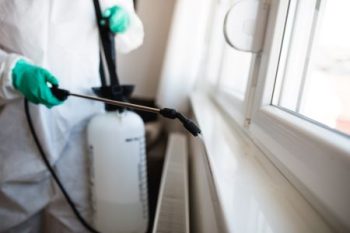
The Killers was founded in the spring of 1982 and has more than four decades of regional pest-control experience. The company provides residential and commercial service and employs Certified Sentricon Specialists for termite protection.
Technicians receive ongoing training and continued education in pest-management practices. This supports accurate identification, responsible treatment selection, clear preparation instructions, and service plans adapted to the pest and property.
Customers working with The Killers receive access to:
- Free pest inspections
- General residential pest control
- Commercial exterminator services
- Ant and insect removal
- Rodent control
- Termite services
- Bee and wasp removal
- A satisfaction guarantee
- Warranty coverage with qualifying annual plans
- Return treatments at no additional charge for qualifying recurring issues
The Killers is a BBB Accredited Business with an A+ rating and has maintained accreditation since August 23, 1996.
For Brush Prairie customers, clear communication is especially valuable when several buildings or a larger property must be inspected. The technician should explain which structures were evaluated, where activity was found, what treatment is recommended, and how follow-up will be handled.
Frequently Asked Questions About Pest Control in Brush Prairie
The cost of pest control in Brush Prairie, WA, depends on the pest species, severity of activity, property size, number of structures, accessibility, and treatment method. A localized ant problem generally requires a different service plan than rodents moving between a barn and house, bed bugs affecting several rooms, or termites beneath a crawl space.
Larger or semi-rural properties may require inspection of garages, workshops, sheds, animal-feed areas, wood storage, and other outbuildings. That broader scope can affect the time and treatment required.
A free pest inspection provides the clearest basis for an estimate. The technician can identify the pest, inspect likely nesting and access areas, and explain whether a one-time service or recurring protection plan is appropriate.
Customers should ask whether the estimate includes monitoring, follow-up appointments, warranty protection, and return treatments. An inexpensive initial application may provide limited value if it does not address the full infestation or the conditions allowing pests to return.
Termite swarm timing can vary with the species, temperature, soil moisture, and weather conditions. In the Pacific Northwest, property owners commonly become more alert during wetter and milder periods when reproductive termites may emerge from an established colony.
Swarmers found outside do not always mean a building is infested. However, winged insects emerging indoors, gathering near windows, or appearing alongside mud tubes or damaged wood should be inspected promptly.
Brush Prairie properties with damp crawl spaces, wood-to-soil contact, leaking exterior areas, or older structural materials may have conditions that deserve closer attention. Do not rely on the presence or absence of swarmers alone. An active termite colony can remain concealed outside the brief swarming period.
A qualified inspector can distinguish termites from flying ants, evaluate possible termite damage, and explain whether monitoring, baiting, targeted treatment, or moisture correction is appropriate. Complete wood-destroying-organism inspections in Washington require applicable Structural Pest Inspector credentials.
Recurring service may be valuable when a property has wooded acreage, fields, several outbuildings, livestock feed, firewood storage, drainage issues, or a history of seasonal infestations. These conditions can create continuous outdoor pest pressure even after indoor activity has been controlled.
Wet and cooler weather may drive rodents and insects toward houses, garages, crawl spaces, and barns. Warmer periods typically increase ant, spider, flea, bee, and wasp activity. A recurring plan allows treatment and monitoring to change with these seasonal patterns.
Properties near Hockinson, Venersborg, Battle Ground, or the more rural portions of Northeast 182nd Avenue may experience different conditions from denser residential areas closer to Vancouver.
Ongoing treatment is not automatically necessary for every pest sighting. A professional inspection should determine whether the issue is isolated or likely to recur. Qualifying annual plans from The Killers may include warranty coverage and return treatments when covered pest activity continues between scheduled appointments.
A pest inspection should begin with a discussion of what you have seen, where the activity occurs, and how long it has been present. Photos, droppings, damaged materials, insect specimens, or information about the time of day may help the technician focus the evaluation.
The technician may inspect the foundation, crawl-space vents, doors, roofline, utility openings, garage, attic, landscaping, storage spaces, and rooms where activity was reported. On a Brush Prairie acreage, the inspection may also include sheds, barns, workshops, feed-storage areas, or other structures when relevant.
Afterward, the technician should explain the likely pest, possible access routes, conducive conditions, and recommended treatment. Customers should understand preparation requirements, product placement, expected timing, follow-up needs, and warranty terms before service begins.
A useful inspection provides property-specific findings rather than an unexplained general application. That information forms the basis for safer, more focused pest management.
Schedule a Free Pest Inspection in Brush Prairie
Pest activity can spread from an outbuilding, crawl space, or exterior nest into occupied areas. The Killers provides ant control, rodent removal, termite services, bed bug treatment, general insect control, bee and wasp removal, and ongoing pest protection throughout Brush Prairie, WA.
Contact The Killers to schedule a free pest inspection. Our team will evaluate the activity, explain the available treatment options, and recommend a practical plan for protecting your home, rental property, acreage, or business.