
Pest Management That Addresses How Pests Enter Canby Properties
The Killers provides professional pest management in Canby, OR, for homeowners, landlords, property managers, and small-business owners dealing with insects, rodents, termites, and other recurring pest issues. Canby’s established neighborhoods, newer residential growth, agricultural surroundings, river corridors, and wet Pacific Northwest seasons can expose local properties to a wide range of pest activity throughout the year.
The community includes compact residential streets, commercial properties, farms, landscaped developments, parks, and homes near open land. A rodent problem in a building near Downtown Canby may involve utility openings or shared structural spaces, while ant invasions near the edge of town may begin in irrigated landscaping, fields, or damp exterior wood.
Successful pest control requires more than treating the first insect or rodent that appears. Technicians should identify the species, locate likely nesting or harborage areas, evaluate structural vulnerabilities, and determine what is allowing the activity to continue. The Killers provides free pest inspections and creates a personalized pest control plan based on the property rather than applying the same service at every address.
Contact The Killers to arrange an inspection for your Canby home, rental property, or business.
Local Conditions That Can Lead to Pest Problems
Canby sits near several significant natural areas and waterways. Canby Community Park is located beside the Molalla River, while nearby Molalla River State Park occupies land near the confluence of the Molalla, Pudding, and Willamette rivers. The area also contains trails, ponds, wooded spaces, and other outdoor habitats.
These natural features contribute to Canby’s character, but they also mean that insects, rodents, and wildlife remain close to residential and commercial development. Pests may move toward structures when weather changes, food becomes available, or outdoor shelter is disturbed.
Common conditions that can increase pest activity include:
- Damaged crawl-space screens and foundation vents
- Openings around plumbing, cables, and utility lines
- Gaps beneath exterior doors and garage entrances
- Shrubs or tree limbs touching siding and roofing
- Irrigated landscaping close to foundations
- Leaking plumbing and damp structural materials
- Firewood, animal feed, or stored materials near buildings
- Unsecured waste at residential or commercial properties
Wet weather can make crawl spaces, decks, foundations, and exterior wood more attractive to moisture-dependent insects. During colder periods, mice and rats may seek shelter inside walls, attics, garages, sheds, and storage rooms. Warmer conditions often increase ant activity, flea problems, and bee or wasp nesting.
Properties near North Holly Street, Territorial Road, South Ivy Street, Highway 99E, and the neighborhoods around Wait Park may each experience different pest pressures. Canby also maintains parks and natural areas throughout the city, including Legacy Park, Northwood Park, Maple Street Park, the Logging Road Trail, and the Willamette Wayside Natural Area.
A professional inspection helps determine whether visible activity is isolated or connected to a larger colony, nest, or structural access problem.
Services Offered for Different Pest Situations
When Ants Keep Returning to the Same Rooms
Ant problems commonly begin when workers discover an indoor source of food or moisture. Trails may appear near kitchen counters, sinks, windows, bathrooms, baseboards, or exterior doors. The primary colony may be outdoors, beneath a slab, inside a wall, or within damp wood.
Professional ant removal begins with identification. Pavement ants, odorous house ants, and carpenter ants do not all nest or feed in the same way, so their treatments should not be identical.
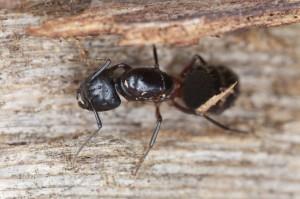
Pavement ants may establish colonies beneath concrete, foundations, patios, driveways, or walkways. Carpenter ants are more likely to attract concern when large ants appear around damp wood, decks, window frames, roof leaks, or crawl spaces. Carpenter ants excavate galleries for nesting and may expand damage in wood that is already weakened by moisture.
Tailored treatment plans may include:
- Inspection of active trails
- Targeted bait placement
- Crack-and-crevice applications
- Exterior perimeter treatment
- Moisture and sanitation recommendations
- Follow-up visits when colony activity remains
Repeatedly spraying the workers visible indoors may interrupt a trail without controlling the colony. A more complete approach traces where the ants are traveling and why they continue entering.
When Rodents Find Structural Vulnerabilities
Mice and rats can enter through small openings around vents, doors, plumbing, electrical lines, roof intersections, and foundations. Once inside, they may travel through crawl spaces, attics, wall cavities, cabinets, and storage rooms.
Rodent control can involve trapping, monitoring, sanitation guidance, and identification of exclusion needs. Entry-point sealing should be coordinated with the removal process so rodents are not accidentally trapped inside the building or forced to create another route.
Canby properties near agricultural land or the city’s outer residential areas may experience continued pressure from rodents living in fields, sheds, barns, and wooded surroundings. Businesses may also encounter activity around deliveries, waste containers, food storage, stockrooms, and utility spaces.
The technician should explain where evidence was found, how rodents are likely moving through the structure, and which repairs would provide the greatest preventive benefit.
When General Insects Spread Indoors
General insect control may address cockroaches, spiders, fleas, silverfish, moths, beetles, boxelder bugs, and other household pests. Treatment depends on where the insects are breeding, what they are feeding on, and whether the source is indoors or outside.
Exterminator services may include focused interior applications, exterior treatment, monitoring, sanitation guidance, and recommendations for reducing moisture or shelter.
Cockroaches may require inspection of plumbing areas, appliances, cabinets, shared walls, utility routes, and food-storage spaces. Flea treatment may need to address occupied rooms, pet resting areas, and outdoor conditions. Spiders may be reduced through targeted treatment combined with control of the insects they use as food.
The service should match the pest rather than relying on a broad application that does not address its life cycle.
When Termites or Other Wood-Destroying Pests Are Suspected
Termites and other wood-destroying organisms may remain hidden while affecting structural materials. Property owners may notice mud tubes, discarded wings, softened wood, unexplained holes, or debris near foundations and crawl spaces.
A termite inspection should examine accessible structural areas, exterior wood, soil contact, moisture conditions, and evidence of active insects. Depending on the findings, service may involve baiting, targeted treatment, monitoring, or continued protection.
Oregon requires applicable individuals and businesses to hold appropriate licenses before performing certain pesticide-related activities. The Oregon Department of Agriculture administers licensing for pesticide applicators and pest-control business operators, along with continuing-education requirements.
Property owners should expect the provider to explain the treatment method, preparation instructions, follow-up expectations, and any conditions that may increase the risk of future activity.
When Bees or Wasps Nest Near Occupied Areas
Bee and wasp removal may be needed when stinging insects build near a doorway, patio, playground, roofline, parking area, barn, or frequently used walkway.
Customers should avoid sealing an opening while insects are still entering and leaving. Doing so may redirect them into wall cavities or interior spaces. Attempting to knock down a difficult nest can also increase the risk of stings.
Professional service considers the insect species, nest location, accessibility, and exposure risk before treatment begins. The technician may recommend direct nest service, physical removal when practical, and entry-point sealing after activity has ended.
More Than Four Decades of Regional Pest Experience
The Killers was founded in the spring of 1982 and has provided pest-control services across Oregon and Southwest Washington for more than four decades. The company’s current service information specifically lists Canby among the communities it serves.
Technicians receive ongoing training and continued education in pest-management practices. This supports accurate identification, responsible product selection, clear preparation guidance, and treatment recommendations based on the pest and property.
The services offered by The Killers include:
- Free pest inspections
- General residential pest control
- Commercial exterminator services
- Ant and insect removal
- Rodent control
- Termite services
- Bee and wasp removal
- Personalized treatment and prevention plans
The Killers is a BBB Accredited Business with an A+ rating. BBB records state that the company has maintained accreditation since August 23, 1996.
Customers also receive a satisfaction guarantee on pest-control services. Qualifying annual plans may include warranty protection and return treatments at no additional charge when covered pest activity persists between scheduled visits.
A dependable pest-control process includes communication as well as treatment. Customers should understand what was found, why the pest is present, which areas require service, how they should prepare, and what can be done to reduce another infestation.
Questions Canby Property Owners Ask About Pest Control
Ants typically return because the colony, food source, moisture condition, or access route remains active. Cleaning a counter and spraying visible ants may temporarily interrupt the trail, but it usually does not reach a colony beneath landscaping, inside a wall, under concrete, or near damp wood.
In Canby, OR, irrigated yards, crawl spaces, mature vegetation, and wet seasonal conditions can place ant colonies close to residential foundations. Pavement ants may nest beneath patios, driveways, and walkways, while carpenter ants may be associated with moisture-damaged structural materials.
Professional identification matters because ant treatments are species-specific. A technician may trace active trails, inspect the foundation, check plumbing and utility openings, and evaluate wood around decks, windows, and crawl spaces.
Customers can help by removing accessible food, correcting leaks, and noting when and where activity is strongest. However, recurring trails or large ants appearing near damaged wood should be inspected rather than repeatedly treated with over-the-counter sprays.
A personalized pest control plan should reflect the pest species, severity of activity, property layout, surrounding environment, and structural vulnerabilities found during the inspection.
The plan may include an initial treatment, monitoring, exterior service, targeted interior applications, bait placement, trapping, or follow-up visits. It should also explain preparation requirements, areas that will be treated, and what customers should expect after service.
For a Canby property near agricultural land, the plan may emphasize rodent monitoring and exterior access control. A home near the Molalla River or heavily landscaped areas may need greater attention to ants, moisture-related insects, and stinging pests. Commercial properties along Highway 99E may require scheduled inspections of storage rooms, waste areas, and utility spaces.
A useful plan should also include practical prevention. Recommendations may address vegetation, moisture, sanitation, food storage, damaged vents, and entry-point sealing. The objective is to control current activity while reducing the likelihood of another infestation.
It depends on the pest. Small gaps around unused openings may be appropriate to repair, but major entry-point sealing should often be coordinated with the control process.
When rodents remain inside, sealing the primary route too early can trap them in the building or force them to create another opening. Closing an active bee or wasp entrance may redirect insects into a wall void or occupied room. Ants may also shift their movement when a visible route is blocked without treating the colony.
A pest-control technician can determine which openings are active and when repairs should occur. Common structural vulnerabilities in Canby homes include damaged crawl-space vents, worn door sweeps, utility penetrations, roofline gaps, and openings around garage doors.
The strongest approach combines removal with exclusion. The pest is controlled first or alongside the repair process, then the building is secured once the technician determines that sealing will not worsen the problem.
Service frequency depends on the pest history and property conditions. A single accessible wasp nest may require one focused treatment, while recurring ants, rodents, spiders, or other seasonal pests may justify scheduled service.
Canby’s Pacific Northwest climate creates changing pest pressure throughout the year. Wet and cooler weather may move rodents and moisture-seeking insects indoors. Warmer conditions can increase ant invasions, fleas, spiders, bees, and wasps.
Homes near parks, rivers, agricultural land, or dense vegetation may experience steady exterior activity. Commercial and rental properties may also benefit from regular monitoring because food sources, occupants, deliveries, and access conditions change over time.
Qualifying annual plans from The Killers may include warranty coverage and return treatments when covered activity continues between scheduled appointments. A technician should explain which pests are included, how often visits are recommended, and whether interior treatment is performed only when activity is present.
Schedule a Free Pest Inspection in Canby
Pest issues are easier to address when the source is identified before activity spreads. The Killers provides ant removal, rodent control, termite services, general insect treatments, bee and wasp removal, and ongoing pest prevention throughout Canby, OR.
Contact The Killers to schedule a free pest inspection. Our team will evaluate the property, explain the available treatment options, and create a tailored plan for your home, rental property, or business.