The Hidden Routes Pests Use to Move Through a Home
Pests rarely stay where homeowners first notice them. A few insects near a baseboard, scratching inside a wall, or droppings beneath a cabinet may be only the visible end of a much larger movement pattern. An exterminator in Vancouver WA uses structural pathway analysis to determine how pests travel through wall voids, utility openings, floors, ceilings, and adjacent spaces, then disrupts those routes with targeted pest treatment and prevention.
Structural pathway analysis identifies the hidden routes pests use to move through a building. An exterminator evaluates entry points, wall voids, utility penetrations, moisture, food sources, and pest behaviors to locate travel corridors. Treatment can then target the actual movement pathway instead of repeatedly treating only where pests are seen.
That distinction matters. Killing visible pests without understanding where they came from can be like mopping up water without finding the leak. The Killers Pest Control approaches pest problems by looking beyond the immediate sighting and examining the structure itself, helping homeowners in Vancouver, WA address the conditions that allow hidden pest movement to continue.
Why Hidden Pest Pathways Can Turn One Sighting Into a Bigger Problem
Many pests move through homes using spaces people never see. Wall voids, gaps around plumbing, cracks near utility lines, crawl spaces, cabinet openings, and small construction joints can connect one area of a structure to another. Rodents may follow utility runs, while German cockroaches can move between kitchens and bathrooms through plumbing penetrations. Carpenter ants and moisture ants may travel through damp structural areas, and Western subterranean termites can exploit hidden routes from the soil toward wood.
A common People Also Ask question is, “How do pests get into walls and move between rooms?” The answer usually involves a network of connected openings rather than one obvious hole. Pests can enter through exterior gaps and then use the interior structure as a highway system.
Vancouver’s damp Pacific Northwest climate can add another layer to the problem. Rain, moisture, vegetation, and seasonal changes may influence where pests search for shelter. Homes near the Columbia River or other moisture-prone areas can have conditions that support certain pest behaviors, making local expertise important during a pest inspection. The goal isn’t simply to identify a pest. It’s to understand where it entered, where it is traveling, and what keeps the pathway active.
Five Mistakes that Leave Hidden Routes Open
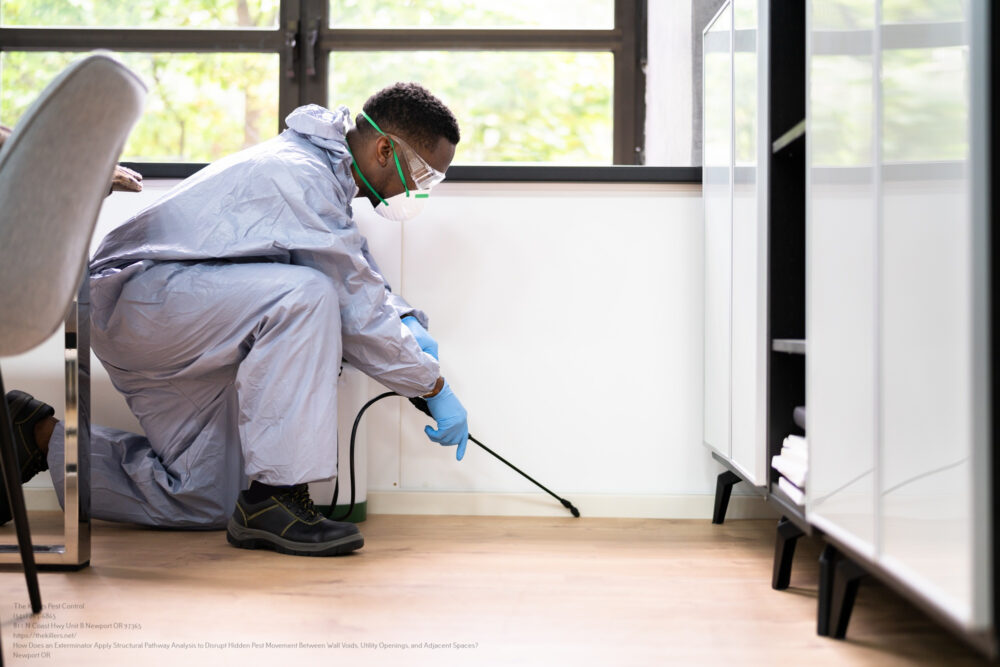
- One of the biggest mistakes is treating only the room where pest activity appears. A homeowner might see a cockroach infestation under a sink and focus on that cabinet, even though the pests are moving through a shared plumbing void.
- Another common mistake is assuming that every recurring sighting means a treatment failed. Sometimes the original pest elimination worked, but a separate pathway remained open, allowing a new pest infestation to develop.
- Ignoring small entry points is another issue. Openings around pipes, wiring, vents, and foundations may look insignificant to people but can be major travel routes for insects and rodents.
- Homeowners also sometimes seal an opening without first determining whether pests are already established behind it. That can change movement patterns without solving the underlying problem.
- Overlooking food sources and moisture is equally important. Barrier treatments and bait stations can be useful components of a treatment plan, but pests may continue to explore a structure when water, shelter, or accessible food remains available. Finally, relying on a single method for every species can create poor results because pest identification should guide treatment.
The Killers Pest Control helps avoid these problems by examining structural conditions alongside the pest itself. Their pest control service can account for ant control, rodent control, cockroach removal, termite control, and other relevant pest control needs based on the actual situation. The EPA’s integrated pest management principles also support addressing the conditions that allow pests to survive and move rather than relying on treatment alone.
Do You Need Expert Exterminator Services to Stop Hidden Pest Movement?
Contact The Killers Pest Control Today For Reliable Pest Solutions!
Why Disrupting Movement Routes Matters More Than Chasing Sightings
Targeting structural pathways can save time because it focuses attention on the places pests repeatedly depend on. Consider a rodent pest-control situation in which snap traps catch animals in a garage, yet new activity persists. The garage may not be the source. Rodents could be entering through another opening and following utility lines or framing members into the area.
The same principle applies to insects. Carpenter ants may appear in one location while traveling elsewhere to forage for food. Bed bug activity requires careful pest identification because movement patterns, proximity to sleeping areas, and potential spread to adjacent spaces influence treatment decisions. A bed bug doesn’t use a home’s structure the same way a rodent does, but understanding its movement is still critical to effective bed bug treatment.
The Killers Pest Control uses pest control solutions tailored to the specific pest and structural conditions, rather than treating every problem with a single broad approach. This can support long-term protection while avoiding unnecessary chemical exposure. Environmentally sound pest control doesn’t mean ignoring a serious infestation. It means using the right level of intervention in the right place.
The Key Lessons to Remember about Hidden Pest Movement
Structural pathway analysis brings pest control back to a basic question: where are pests actually coming from, and how are they getting there? A complete answer requires examining pest behavior, entry points, adjacent spaces, moisture, food sources, and the building’s internal structure.
Homeowners should remember that repeated activity doesn’t automatically mean a treatment was ineffective. It may indicate movement from another area, an overlooked access route, or conditions that continue supporting pests. A careful pest inspection and integrated pest management strategy can help distinguish between these possibilities.
The strongest long-term pest control solutions combine accurate pest identification, precision targeting, appropriate treatment, and prevention. For Vancouver homeowners, that means paying attention to the routes pests use behind walls and around utility systems rather than focusing only on where they were first spotted. Smart structural analysis supports more effective pest elimination and long-term pest management plans for exterminator in Vancouver WA needs.
Why Choosing The Killers Pest Control is the Smart Way to Stop Hidden Pest Movement
We at The Killers Pest Control provide the best solutions to our customers by looking beyond the pests they can see and investigating the hidden pathways that may be keeping an infestation active. As this guide has shown, wall voids, utility openings, adjacent spaces, moisture conditions, food sources, and overlooked entry points can all influence how pests move through a home.
We provide dependable pest control, ant removal, cockroach removal, rodent removal, bed bug treatment, and termite control solutions tailored to the conditions found on each property. Our team focuses on careful inspection, targeted treatment, and practical prevention so customers can make informed decisions about protecting their homes.
Contact The Killers Pest Control for professional pest control and exterminator services in Vancouver, WA, and take the next step toward disrupting hidden pest routes before they become a larger problem. For precise inspections, targeted treatment, and smarter long-term home protection, trust The Killers Pest Control for an exterminator in Vancouver WA.
Do You Need Expert Exterminator Services to Stop Hidden Pest Movement?
Contact The Killers Pest Control Today For Reliable Pest Solutions!