The Hidden Colony Problem is Bigger Than the Damage You Can See
Termites rarely make their full presence obvious. By the time mud tubes, damaged wood, or termite swarmers appear, a hidden termite colony may already have established extensive feeding pathways below the surface. That’s why termite baiting in Salem OR focuses on more than treating the spot where activity becomes visible. Effective baiting is designed around how worker termites find food, recruit nestmates, and share resources throughout concealed colony networks.
Termite baiting uses knowledge of termite feeding and trophallaxis, the exchange of food among colony members, to place slow-acting active ingredients into pathways workers can carry through hidden colony networks.
A termite infestation can feel a bit like seeing one crack in a wall while knowing there may be much more happening behind it. The visible sign is only one clue. The Killers Pest Control evaluates feeding activity, soil contact, moisture conditions, structural openings, and likely foraging routes to develop termite protection strategies suited to the property.
How Termite Baiting Connects Feeding Routes With Smarter Colony Elimination
For termite baiting in Salem OR, understanding trophallaxis begins with understanding access. Worker termites don’t follow a homeowner’s floor plan. They follow underground and concealed routes shaped by food availability, moisture, soil conditions, and the structure itself. A bait station becomes useful when it intersects active or likely foraging activity and provides a food source the termites will continue to use.
The Sentricon® system is one example of a termite control system built around monitoring and baiting. The current EPA label for Recruit® HD states that its active ingredient, noviflumuron, prevents successful molting and development in subterranean termites, leading to colony decline when the bait is consumed and managed according to label directions. The system is intended for ongoing monitoring and protection as well as prevention and elimination of subterranean termite colonies. (US EPA)
The benefit is a more targeted approach to pest prevention. Instead of assuming that visible damage defines the full problem, pest professionals can follow evidence of feeding activity and adjust monitoring around the property. This can be particularly valuable when a hidden colony extends beyond the most obvious signs.
Why Trophallaxis Turns a Small Feeding Point Into a Colony-Wide Opportunity

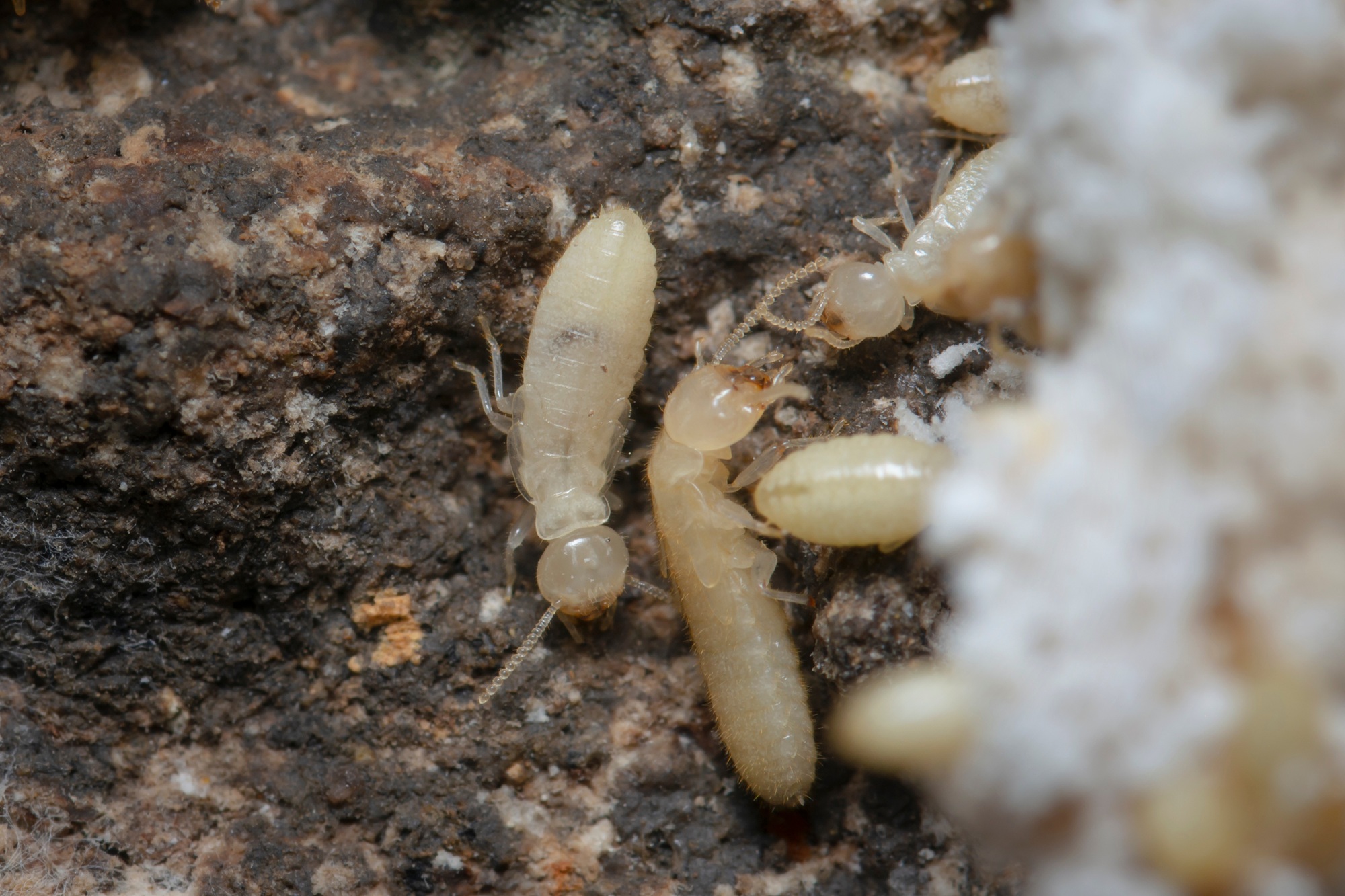
Trophallaxis is the exchange of food and other fluids between social insects. For subterranean termites, this behavior helps distribute nourishment through the termite colony and supports members that don’t directly forage at a particular food source. In baiting strategies, that social feeding behavior matters because workers that consume a bait matrix may share resources within the colony network.
The principle behind termite baiting isn’t to force an immediate reaction. In fact, the U.S. Environmental Protection Agency explains that termite baits commonly use cellulose baits containing slow-acting active ingredients. Some ingredients disrupt insect development and termite growth, allowing normal feeding and movement to continue long enough for the baiting process to affect the broader colony.
So, how do termites spread bait through a colony they can’t all physically reach? Worker termites collect food from active sources and interact with other colony members. That makes the pathway from a bait station to the hidden colony more important than the station alone. A properly managed termite control system considers feeding activity and continued access because disrupting that pathway too early can reduce the bait’s effectiveness.
This is also why a termite inspection matters before making assumptions. The exact location of a subterranean termite colony may remain hidden while its workers forage across changing areas. A professional evaluation can identify signs of termites, mud tubes, conducive moisture, soil contact, and locations where termite activity is more likely to occur.
Are You Ready for Professional Termite Control?
Contact The Killers Pest Control today for expert help protecting your property from hidden termite activity.
What Pest Professionals Look for Before Choosing Bait Station Locations
A careful approach starts with the structure and moves outward. The Killers Pest Control can evaluate areas where termites are likely to encounter the property, including foundation edges, structural openings, accessible crawl space conditions, moisture-prone zones, and locations with evidence of feeding. The process isn’t simply about putting a fixed number of stations into the ground and walking away.
Professionals generally consider several connected questions: Where are worker termites currently active? What soil or moisture conditions could support continued foraging? Are there visible mud tubes or other signs of termites? Could landscaping, wood materials, or drainage patterns create favorable routes toward the structure? The answers help guide termite bait stations and the wider termite protection plan.
The EPA’s Recruit® HD label specifically describes evaluating visible activity, termite-infested materials, moist shaded areas, irrigation sprinkler heads, roof downspouts, planting beds, and crawl space locations when determining where stations may be useful. It also provides specific installation and inspection requirements that qualified users must follow.
This is where termite baiting in Salem OR becomes more than a simple product choice. A strong strategy connects inspection findings with station placement, bait availability, follow-up monitoring, and practical moisture control. If conditions change, the treatment plan may need to adapt accordingly.
The Killers Pest Control Knows that Hidden Networks Need Ongoing Attention
The most important lesson is that termite baiting works by understanding termite behavior rather than relying solely on what people can see. Trophallaxis can help move consumed bait through social feeding networks, while inspection and monitoring help professionals place and maintain bait where active foraging is most likely to occur. Mud tubes, termite swarmers, and damaged wood are warning signs, but they don’t provide a complete map of the hidden colony.
Homeowners should remember that colony elimination takes a broader strategy than placing a product near the foundation. Successful termite protection can involve bait stations, continued monitoring, moisture control, inspection findings, and adjustments based on changing feeding activity. The right combination depends on the property, the pest pressure, and the conditions supporting the infestation.
Why Choosing The Killers Pest Control is the Smart Way to Protect Your Property
We at The Killers Pest Control provide the best solutions to our customers by looking beyond the surface signs of termite activity and focusing on the conditions that allow hidden colonies to feed and spread. We understand that effective termite protection depends on careful inspections, thoughtful monitoring, and treatment strategies that account for how worker termites move resources through concealed colony networks.
We showcase our excellent termite control services by helping customers understand their options, from termite inspections and targeted pest management to ongoing monitoring and preventive guidance. We also provide professional support designed to address termite activity while considering moisture conditions, structural risks, and long-term pest prevention.
When hidden feeding activity threatens a home or business, waiting for more visible structural damage isn’t a smart plan. Contact The Killers Pest Control for professional termite services and expert guidance tailored to your property, because smarter termite baiting in Salem OR use monitoring, feeding-pathway knowledge, and ongoing protection to address hidden colony networks.
Are You Ready for Professional Termite Control?
Contact The Killers Pest Control today for expert help protecting your property from hidden termite activity.