How Shared Food and the Termite Molting Cycle Turn Bait Into a Colony-Level Control Strategy
Subterranean termites can damage a building long before their presence becomes obvious because workers forage through the soil and along concealed passages in search of food. The science behind Sentricon termite protection uses natural behavior to deliver bait to termites, which can then share it with other members of the colony.
For property owners exploring Sentricon in Vancouver WA, the key distinction is that baiting targets the biological processes sustaining a subterranean termite colony, rather than relying solely on a chemical barrier around a structure. Its effectiveness depends on termites finding and feeding on the bait, the active ingredient disrupting their development, and appropriate monitoring continuing until treatment progress can be assessed.
Why Termites Share Food Across the Colony
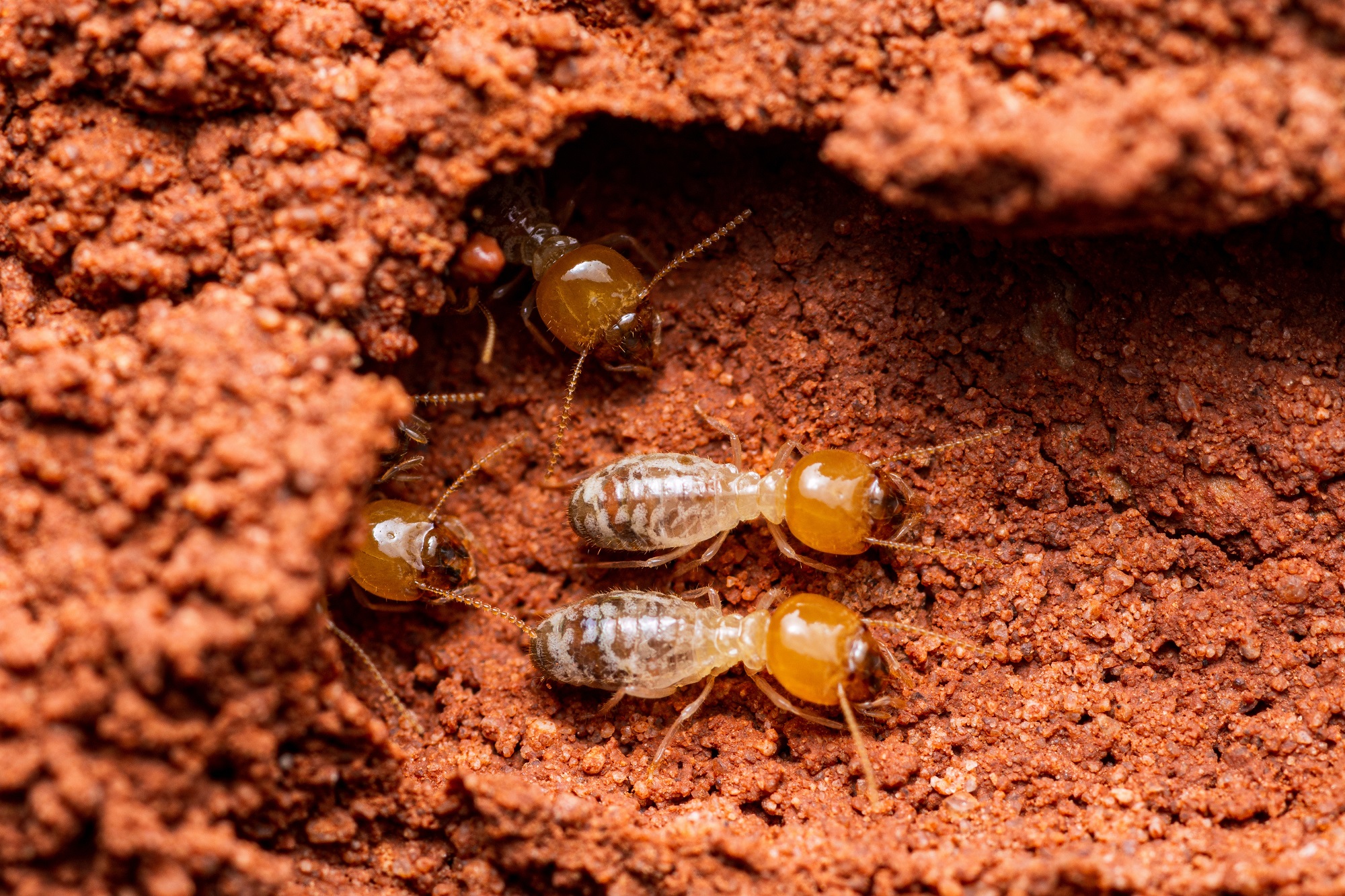
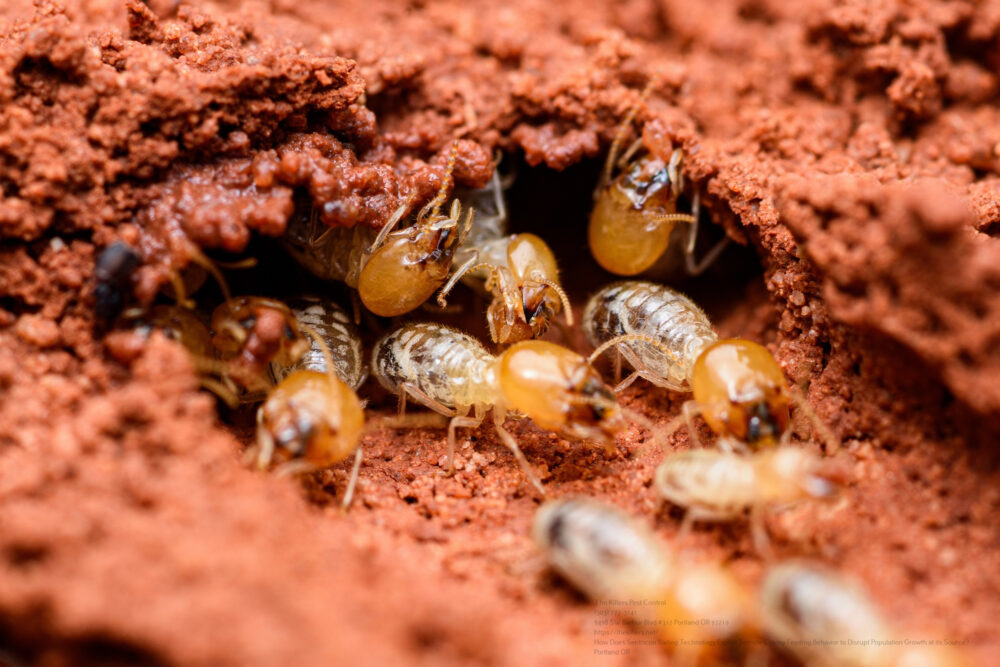
A subterranean termite colony functions as a cooperative social system. Workers search for food, maintain tunnels, care for developing termites, and help support reproductive members, including the queen. Their food-sharing behavior, known as trophallaxis, allows nutrients and other substances to pass between colony members. This normal exchange is central to colony survival, but it also creates a pathway through which an appropriately designed bait can affect termites beyond those that first encounter a station.
Worker termites typically forage through soil and concealed routes in search of cellulose, the structural material found in wood and other plant-based materials. A station positioned along a route used by foraging termites can provide access to bait formulated for termite feeding. Once workers consume the bait, they can transfer it through the colony’s food-sharing network. The goal is to move the effect beyond a few exposed workers and interfere with the colony’s ability to maintain itself.
This process does not mean termites deliberately seek out a pesticide or recognize a station as a threat. They encounter the bait while following their ordinary foraging behavior. Sentricon is designed to take advantage of that behavior, using targeted bait delivery rather than depending entirely on a continuous band of liquid termiticide in the soil. The method still requires appropriate station placement and monitoring because termites cannot feed on bait they never encounter.
What Research and the Green Chemistry Award Actually Establish
Sentricon’s development is associated with Corteva Agriscience and earlier work conducted under Dow AgroSciences. The U.S. Environmental Protection Agency recognized the Sentricon Termite Colony Elimination System with a Presidential Green Chemistry Challenge Award in 2000. The EPA’s award description highlighted targeted bait delivery at termite activity sites and the potential to reduce reliance on widespread soil pesticide applications.
That award is relevant to the history of responsible chemistry in termite management. Still, it should not be interpreted as proof that every installation yields the same outcome or has the same environmental impact. Product formulations and approved directions can change, so current product information is the appropriate reference for the active ingredient and use requirements.
Research also reinforces the need for realistic expectations. A review of termite baiting literature published in Pest Management Science examined studies involving multiple active ingredients, termite species, and countries. It found that colony elimination had been achieved in many cases, but reported results varied, and the process could take considerable time. The findings support baiting as an established termite management method while showing why claims of immediate or guaranteed elimination would be misleading.
Need help protecting your property from termites?
Contact The Killers Pest Control to discuss Sentricon options for your home or commercial building.
How the Active Ingredient Disrupts Termite Development
The central biological mechanism involves molting. Termites must periodically shed their old outer covering as they grow and develop. This process is necessary for immature termites to mature and for the colony to replace individuals as they age or die. Sentricon bait uses an active ingredient that interferes with this process, preventing affected termites from completing normal development.
According to the current Sentricon product information, the active ingredient is noviflumuron, which disrupts molting. Workers that consume the bait can share it with other colony members, extending its effect through the population. As affected termites fail to molt successfully, the colony can lose workers and developing individuals that would otherwise help sustain its activity. The resulting disruption can undermine the colony’s ability to gather food, care for young, and maintain its social structure.
This mechanism differs from a product designed to kill termites immediately on contact. Baiting depends on feeding and transfer, followed by biological effects that unfold over time. The delay is relevant because workers need an opportunity to consume the bait and distribute it before the impact becomes widespread. It also explains why a single observation at a station cannot establish whether the entire colony has been eliminated.
Colony-level control is the intended outcome, but the result should not be treated as automatic. Feeding activity, station access, colony conditions, and correct product use all influence the process. A termite professional assesses the evidence available during service visits rather than assuming that the absence of visible termites at one point proves the complete elimination of the termite colony.
Why Baiting Targets the Colony Instead of Only Visible Termites
A termite infestation is not simply a collection of insects near damaged wood. The visible workers represent only part of a larger system that may include a queen, developing termites, and individuals performing different roles. Killing termites seen on a wall or near a window does not necessarily remove the subterranean termite colony responsible for the activity. If the colony remains active underground, additional workers may continue foraging toward the structure.
Sentricon baiting is designed to address this underlying source. When workers discover a station and consume its bait, food sharing can distribute the active ingredient among other members of the colony. As the molting process is disrupted, the colony’s ability to replace and maintain its population can deteriorate. This approach aims to affect the colony’s ongoing survival rather than merely reducing the number of termites visible at a particular location.
The queen is an important part of this process because she supports reproduction, but successful colony control involves more than reaching one individual. The effect must extend through enough of the colony to interrupt its survival and development. Although Sentricon is designed for entire-colony elimination, the outcome and timeline can vary, and evidence of reduced activity should be interpreted in the context of the monitoring process. Independent research studies on termite baiting have documented colony elimination as a central objective, while also reporting variation in success and the time required for results.
How Sentricon Compares With Liquid Treatments
Liquid treatments and termite baiting systems use different approaches to managing subterranean termites. Depending on the product and application, liquid termiticides are generally used to create treated zones in soil or to treat specific areas where termites may enter or travel. Baiting instead depends on termites encountering a food-based product and carrying its active ingredient into the colony through feeding and transfer.
The distinction matters for buildings with complex foundations, limited soil access, or in areas where establishing a continuous treated zone is difficult. A baiting program can provide a targeted alternative in suitable circumstances, although its success depends on interception and feeding. Liquid treatments may remain appropriate for certain properties or treatment objectives, so neither approach should be described as universally superior without considering the structure, infestation, product label, and professional assessment.
Sentricon also should not be presented as a standalone solution for every termite problem. A complete plan may need to address conditions that support termite activity, such as persistent moisture, wood in direct contact with soil, or untreated entry points. Baiting does not repair damaged timber or correct drainage problems, and other control measures may be considered when circumstances warrant them. The appropriate approach depends on the property’s needs and the treatment options permitted by their respective labels.
Why Monitoring and Ongoing Service Remain Necessary
The biological mechanism only works if termites encounter and consume the bait. Sentricon stations are generally installed in soil around a building’s perimeter, where foraging termites may discover them while searching for food. A station that shows no activity during one visit does not automatically prove that termites are absent from the property. Foraging routes can change, and the timing of discovery varies with site conditions and termite behavior.
Certified Sentricon specialists assess station activity and service the system in accordance with current product instructions. Monitoring helps determine whether termites have found the bait, whether stations need attention, and whether additional action may be warranted. Property owners should avoid moving or opening stations themselves, and any damage caused by landscaping or construction should be reported so that the equipment can be checked.
Ongoing service also matters after a colony has been controlled. Maintaining stations and following the prescribed monitoring schedule help ensure continued protection against future termite activity, although no treatment can guarantee that a property will never experience another infestation. A valuable asset such as a home or commercial building benefits from an approach that combines appropriate termite control with attention to moisture, wood-to-soil contact, and other conditions that can contribute to termite problems.
Applying Colony-Level Control to Properties in Vancouver, WA
For property owners in Vancouver, termite management decisions should be informed by the building’s construction, accessible soil, evidence of activity, and treatment history. The same principles apply to commercial buildings and residential properties: the purpose is to understand how termites are entering or foraging around the structure and select a suitable treatment strategy. Sentricon has been used across the United States, coast to coast, but regional availability does not remove the need for a site-specific plan.
The Killers Pest Control can be contacted through its website to discuss Sentricon in Vancouver WA and termite concerns. A qualified termite professional can explain how the system works, what monitoring involves, and what evidence is needed to evaluate treatment progress. For property owners seeking a practical way to protect their biggest investment, understanding the biology behind baiting makes it easier to distinguish a colony-focused strategy from a treatment that addresses only visible termites.
Need help protecting your property from termites?
Contact The Killers Pest Control to discuss Sentricon options for your home or commercial building.