Following Hidden Pest Routes to Find Where an Infestation Begins and How it Spreads
Pests rarely move through a building at random. Wall voids, plumbing lines, wiring channels, and utility penetrations can create concealed routes that allow insects and rodents to travel between rooms or enter from outside. Effective pest control in Vancouver WA therefore involves more than treating the area where pests appear. A thorough pest control service investigation looks for the source of activity, the pathways pests use, and the conditions that allow them to remain inside.
A homeowner might notice carpenter ants near a bathroom, hear rodents moving above a ceiling, or find bed bugs in a bedroom without realizing that the visible evidence represents only one part of a larger problem. Pest control professionals use inspection findings, movement patterns, monitoring tools, and structural knowledge to trace these issues. This investigative process helps distinguish an isolated pest occurrence from an established infestation and supports a more appropriate pest treatment plan.
How Professionals Build a Trail from Visible Pest Evidence
The investigation usually begins with the location, timing, and type of pest activity. Droppings, insect fragments, damaged materials, shed skins, mud tubes, grease marks, and repeated sightings provide different clues. The pest’s identity matters because carpenter ants, rodents, bed bugs, and termites behave differently and use different routes through a structure.
Professionals may ask when the activity first appeared, which rooms are affected, whether sightings occur at particular times, and whether plumbing or renovation work has recently taken place. These details help narrow down possible movement patterns. For example, carpenter ants appearing near a kitchen window may be drawn to a damp section of the wall, while rodents repeatedly appearing near a utility room may be using an opening around a pipe or conduit.
A pest inspection also considers what is happening outside the building. Vegetation touching exterior walls, gaps around doors, damaged screens, foundation openings, and moisture near the structure can influence pest pressure. In Vancouver, Washington, properties near the Columbia River or elsewhere in Clark County may have different landscaping, drainage, and building conditions. Hence, the investigation needs to reflect the actual site rather than rely on a generic checklist.
How Plumbing Lines and Utility Penetrations Become Pest Highways
Pipes and utility lines frequently pass through floors, walls, ceilings, and foundations. Small gaps around these penetrations can provide access for insects and rodents, particularly when openings are poorly sealed or have deteriorated over time. Plumbing lines can also create favorable conditions when leaks produce moisture inside cabinets, beneath floors, or behind walls.
A professional investigation follows the pipe route from the visible fixture toward accessible service areas. Under sinks, around toilets, behind appliances, and near water heaters are common places to examine for pest evidence and moisture conditions. A leak may attract insects by supplying water, while the opening around the pipe can provide a separate route into the building. These two conditions may occur together, but they require different corrective actions.
Utility penetrations deserve similar attention. Electrical conduits, cable lines, HVAC connections, vents, and service openings can create narrow passages between the exterior and interior. The U.S. Environmental Protection Agency explains that gaps around plumbing, wiring, and HVAC components can allow pests to enter or move through buildings. Its guidance on pest control for housing managers also discusses sealing openings and coordinating pest observations with building maintenance.
The inspection must account for the material surrounding each opening. A sealant suitable for a small gap may not be appropriate where heat, moisture, movement, or fire-rating requirements apply. Rodents can also gnaw through some softer materials, so simply filling a visible opening may not provide lasting exclusion. Repairs around electrical, gas, or plumbing systems should be handled by appropriately qualified tradespeople when the work falls outside routine pest-proofing.
Do You Want Pest Control With a More Thorough?
Contact The Killers Pest Control today for friendly, reliable help with pest-related concerns.
What Wall Voids Reveal about Hidden Pest Movement
Wall voids are the spaces between interior and exterior wall surfaces. They may contain insulation, framing, wiring, and plumbing, creating sheltered areas where certain pests can move or remain concealed. Because these spaces are not normally visible, professionals look for evidence at accessible points such as electrical openings, baseboards, cabinets, plumbing access panels, and gaps around fixtures.
The type of evidence helps guide the next step. Rodent droppings, gnaw marks, scratching sounds, or nesting material may suggest movement within a wall or ceiling cavity. Carpenter ants can leave behind frass, which resembles fine wood shavings and may contain insect body parts. Termite activity requires a different investigation because termite colonies can travel through soil and concealed structural routes before damage becomes obvious.
Professionals may use flashlights, inspection mirrors, moisture meters, monitoring devices, or other appropriate tools to examine accessible areas. In some situations, a small opening or borescope inspection may be considered. Still, invasive inspection should be justified by the evidence and performed with attention to electrical wiring, plumbing, and building materials. A wall should not be opened casually because an incorrect cut can damage utilities or create unnecessary repair work
How Monitoring Helps Confirm the Route
Finding a possible entry point is not the same as proving that pests are using it. Professionals often compare evidence from several locations to establish whether activity follows a consistent path. Monitoring devices, appropriately placed traps, and repeated observations can help show where pests travel and whether activity changes after corrective work.
For rodent removal, the inspection may include checking for droppings, gnawing, rub marks, tracks, nesting materials, and sounds in ceilings or wall cavities. These signs can help distinguish a frequently used route from an opening that is present but inactive. With insects, monitoring may involve sticky monitors or other devices suited to the species. Bed bugs, for example, are more likely to be investigated around sleeping areas, furniture joints, and nearby hiding places than through plumbing lines alone.
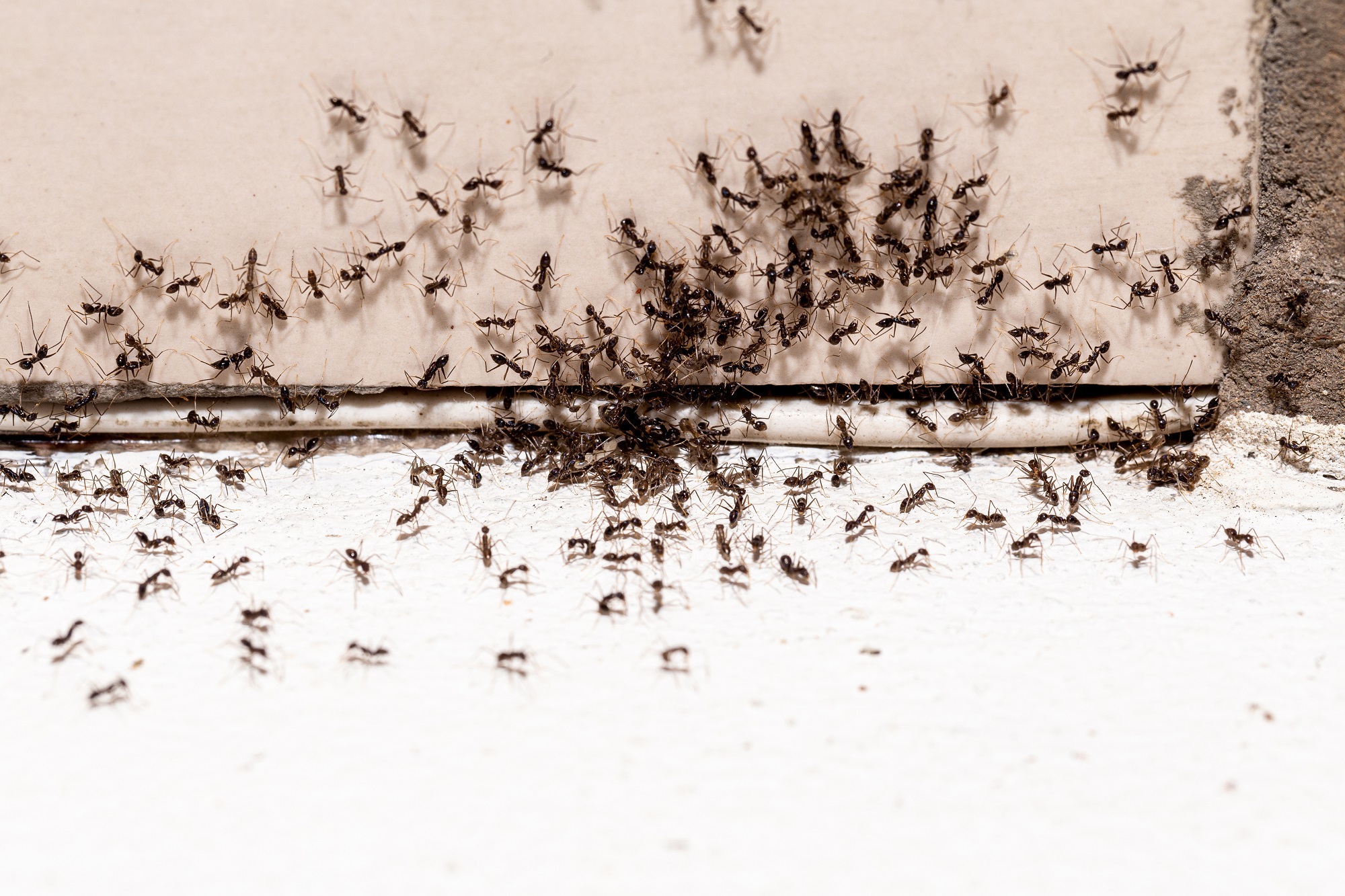
The same approach applies to carpenter ants and other crawling insects. Their movement may be followed from indoor sightings toward damp wood, exterior vegetation, or gaps around a structure. Yellow jackets and boxelder bugs require different investigation methods because their entry and nesting behavior differs from that of ants or rodents. Correct identification prevents a pest removal company from treating unrelated signs as though they were from a single infestation.
How an Integrated Pest Management Plan Uses Inspection Findings
An effective pest management plan connects identification, monitoring, prevention, and control. This approach is commonly called Integrated Pest Management. The EPA describes IPM as a process that uses inspection, accurate identification, monitoring, prevention, and carefully selected control methods rather than depending on routine pesticide application alone.
Once the likely route is understood, a professional can determine which measures are relevant. Depending on the pest and building, a plan may include entry point identification & sealing, high-risk zone monitoring, structural vulnerability assessment, or targeted interior & structural treatments. A crawl space or basement may require separate attention if moisture, access openings, or concealed pest activity are contributing to the problem.
Treatment choices must match the pest and the location. Liquid barriers may be considered for certain termite or perimeter treatment situations, while Sentricon® bait is a targeted option for subterranean termite management. Dry foam void filler may be used in specific labeled applications, and a granular pest barrier may be appropriate for certain exterior pest-control needs. These methods are not interchangeable, and none should be selected simply because a pest has appeared near a wall or pipe.
Other service terms, such as crawl space & basement treatment, prevention treatments, and barrier protection, describe possible components of a broader pest management approach. A triple barrier defense concept may refer to combining inspection, exclusion, and targeted treatment, but it should not be treated as a universal technical standard. The correct combination depends on the pest, the structure, and the product label. For example, termite control treatments and Sentricon® bait address different aspects of termite management and should not be confused with general insect control.
Why Commercial and Residential Buildings Need Different Inspection Strategies
Residential inspections often focus on kitchens, bathrooms, bedrooms, attics, garages, and crawl spaces. Commercial pest control may require a broader review because larger buildings often include loading areas, shared plumbing systems, storage rooms, food preparation spaces, mechanical rooms, and multiple utility connections. A pest problem in one section can sometimes affect adjoining areas through shared service routes or structural openings.
In a commercial building, professionals may coordinate observations with maintenance staff, cleaners, plumbers, and property managers. A recurring issue near a pipe chase, for example, may need both pest treatment and a plumbing repair. Scheduled visits can help track recurring pest occurrences, review monitoring results, and determine whether the pest management plan needs adjustment. This is particularly useful when a building has several tenants or areas with different sanitation and access conditions.
Residential and commercial pest control services should also distinguish between occasional sightings and established pest infestations. A single boxelder bug near a window does not necessarily indicate an indoor breeding population, while repeated rodent evidence or a confirmed bed bug infestation requires a more focused response. The purpose of the investigation is to identify the actual level of activity and select proportionate pest solutions.
What Property Owners Should Expect from a Thorough Inspection
A useful inspection should explain what was found, where activity appears to be concentrated, and which conditions may be contributing to it. Property owners should receive clear information about recommended treatment, exclusion work, monitoring, and any repairs that require another trade. Structural pest inspectors and pest management professionals may use different inspection scopes depending on the assignment, so the purpose and limits of the assessment should be clear.
Professional qualifications can also be relevant when evaluating a provider. A credential should be verified rather than assumed, and it should not be presented as proof that every technician or pest control company holds it. The same care applies to claims about specialized inspection methods, treatment guarantees, and customer service and guarantee policies.
A pest control company should explain its findings without relying on a high-pressure sales pitch. Customer relations and customer care team support can make it easier for property owners to understand scheduled visits, service recommendations, and follow-up requirements. Customer feedback may also help someone assess communication and customer service, but online reviews cannot replace a clear explanation of the actual inspection and proposed work. An online quote or pricing plan should identify what the service covers, whether repairs are included, and whether additional visits or treatments could affect the final cost.
Tracing the Source Leads to More Effective Long-Term Prevention
A pest problem is rarely solved simply by treating the spot where an insect or rodent was first noticed. Wall voids, plumbing routes, and utility penetrations can connect concealed spaces, making source identification and entry-point correction important parts of an effective response. The right approach combines pest identification, monitoring, targeted treatment, and suitable structural repairs.
The Killers Pest Control can help property owners explore relevant pest control in Vancouver WA and understand how to address different pest problems. Whether the concern involves carpenter ants, rodents, bed bugs, termites, or other insects, the investigation should reflect the pest’s behavior and the building’s condition. A well-planned maintenance service focuses on the root cause of the issue rather than repeatedly treating the same visible symptoms.
Do You Want Pest Control With a More Thorough?
Contact The Killers Pest Control today for friendly, reliable help with pest-related concerns.