Reading the Evidence to Tell an Established Infestation from a Fresh Entry
Recurring pest sightings do not always mean the same colony or population has survived an earlier treatment. The activity may come from a hidden breeding site, pests entering through an unsealed opening, or a combination of both. Effective pest control in Vancouver WA, begin with identifying which explanation best fits the evidence. For anyone researching pest control, understanding this distinction helps explain why the right response depends on more than simply treating the place where a pest appeared.
Specialists look at the type of pest, the location and pattern of sightings, signs of reproduction, and possible routes into the building. They may also consider whether activity changes after treatment, whether immature pests are present, and whether evidence appears in several unrelated areas. No single clue proves the source, but several observations together can help establish whether pests are reproducing on the property or repeatedly arriving from outside.
What Evidence Suggests a Breeding Site is Nearby?
A breeding site often produces recurring evidence in a relatively consistent area. Depending on the species, that evidence may include eggs, larvae, nymphs, pupal cases, nests, shed skins, or repeated sightings of different life stages. Finding these signs in a protected location, such as a wall void, attic, crawl space, storage area, or concealed crack, can suggest that pests are developing nearby rather than merely passing through.
The type of pest changes what specialists look for. Bed bugs, for example, may leave eggs, shed skins, dark spotting, and live insects around places where people sleep or rest. Their presence across several life stages can indicate an established infestation, although the signs need to be correctly identified. A single bed bug sighting does not reveal how long the insects have been present or where the infestation began.
Ant activity requires a different interpretation. Carpenter ants may forage indoors from a nest located elsewhere, or a colony may be established in damp or damaged wood within the structure. Repeated activity around the same timber, combined with signs such as frass or visible galleries, can justify closer investigation. A few ants near a window, however, do not automatically establish that a nest is inside the building.
How Monitoring Helps Confirm the Source
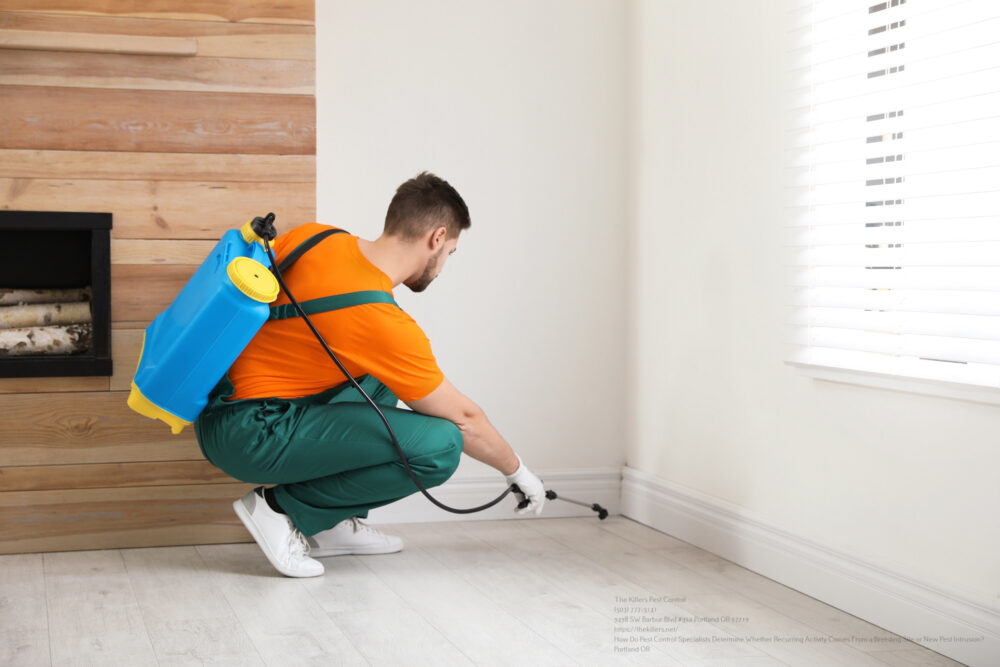
A pest inspection provides a starting point, but monitoring helps determine whether the suspected source is still active. Specialists may use traps, monitors, or repeated visual checks, depending on the pest and the property. The placement of monitoring devices matters: locations should help reveal movement, activity levels, or changes in distribution rather than collect pests at random.
For rodents, monitoring can help establish whether activity continues along a particular route or near a suspected entry point. Specialists may compare droppings, tracks, gnawing, and trap findings over time. A decline in indoor evidence after exclusion work may support the conclusion that an access route has been addressed. However, follow-up checks remain useful because rodents can exploit other openings.
Insect monitoring also needs to reflect the species involved. Sticky monitors can help reveal where crawling insects are active, but they do not necessarily identify the breeding site on their own. For bed bugs, for example, monitors may provide supporting evidence, while a thorough inspection of beds, furniture, seams, and nearby hiding places remains important. The U.S. Environmental Protection Agency describes inspection, identification, monitoring, and evaluation as connected parts of an Integrated Pest Management approach in its Integrated Pest Management Toolkit.
Do You Want Pest Control With a More Thorough?
Contact The Killers Pest Control today for friendly, reliable help with pest-related concerns.
How New Intrusions Leave a Different Pattern
Fresh intrusion becomes more likely when pest evidence appears near exterior access points or follows a route from outside into the building. Specialists may examine gaps around doors, windows, vents, rooflines, utility penetrations, and foundation edges. They also consider nearby vegetation, stored materials, exterior lighting, and other conditions that could make the property easier for pests to approach.
Rodents provide a useful example. Droppings, gnaw marks, tracks, or sounds in an attic may indicate activity inside, but they do not by themselves establish whether rodents are nesting there or entering repeatedly. If evidence is concentrated near a damaged vent or gap around a pipe, the opening becomes a relevant part of the investigation. Roof rats may also use branches, fences, and roof features to reach upper portions of a building, so an inspection limited to ground-level access points can miss important routes.
Some insect activity is more closely tied to seasonal movement or outdoor conditions. Boxelder bugs, for instance, may gather on sun-exposed exterior surfaces and enter through small openings in search of protected spaces. Yellow jackets may be seen around a building because a nest is established in a nearby exterior cavity, although repeated sightings alone do not identify the nest location. Specialists interpret these patterns in relation to the species rather than treating every recurring pest occurrence as evidence of indoor breeding.
Why the Location and Timing of Sightings Matter
A pest calendar can help reveal patterns that are difficult to recognize from isolated reports. Recording the date, room, approximate number of pests, weather conditions, and any recent treatment gives specialists a clearer picture of how activity changes. If sightings repeatedly occur in the same location over several weeks, that pattern may justify checking for a nearby harborage or breeding site. If activity appears mainly around doors or windows during particular periods, outside intrusion may deserve closer attention.
The distribution of evidence is just as useful as its timing. Pests appearing in one cabinet, wall void, or section of an attic may suggest a localized source. At the same time, scattered activity across several entry points may indicate multiple routes or a broader population. However, pests can travel through connected spaces, so the place where they are noticed may be some distance from their source. A bed bug found in a living room, for example, does not necessarily mean that a breeding site is located in that room.
Specialists also compare current findings with the property’s history. Previous treatments, repairs, changes in storage, plumbing work, and new landscaping can all affect how pests access or use a building. This context helps prevent a mistaken conclusion based on one inspection snapshot.
How the Findings Shape the Treatment Plan
The distinction between a breeding site and new intrusion changes what a suitable pest management plan needs to address. If evidence supports the presence of an established breeding population, the response may need to locate and treat the source, account for different life stages, and monitor the affected area afterward. If the activity appears to stem from repeated entry, the focus may shift toward exclusion, barrier protection, and the correction of conditions that make the property accessible.
Some situations involve both causes. A rodent population may be nesting in an attic while additional rodents continue entering through a damaged vent. A carpenter ant colony may be established in compromised wood, while other ants forage indoors from an outdoor nest. In these cases, treating only the visible pests or sealing only one opening may leave part of the problem unresolved.
The selected approach should also account for the pest’s biology. Termite colonies, for example, require different inspection and control considerations from a wasp nest or a bed bug infestation. Termite control treatments should be based on the type of termite, evidence of activity, and the structure involved. Similarly, a pest specialist acting as an ant exterminator needs to distinguish carpenter ants from other ant species before deciding where the source may be located.
What Property Owners Can Record Before a Visit
Useful observations can make an inspection more productive. Property owners do not need to identify the species or investigate concealed spaces themselves, but they can document what they have noticed and where it occurs. A simple record can include:
- The date and location of each sighting, including whether activity occurs indoors or outdoors.
- The number and appearance of pests, where they can be observed safely.
- Any signs such as droppings, shed skins, damaged packaging, nests, or wood debris.
- Recent changes, including deliveries, plumbing work, landscaping, repairs, or movement of stored items.
- Previous treatment dates and whether activity decreased, moved, or returned afterward.
This information can help a pest control company distinguish a continuing pattern from an isolated occurrence. Photographs taken from a safe distance may also help with identification, particularly when the pest is no longer present. Property owners should not handle suspected nests, disturb wall cavities, or attempt to collect insects that may sting or bite.
For businesses, record-keeping can be especially useful because different employees across multiple rooms or shifts may report activity. A commercial pest management plan may need to account for food storage, waste handling, deliveries, building access, and operating schedules. Residential pest control generally involves a different pattern of occupancy and inspection priorities, so the same monitoring arrangement will not suit every property.
Why Follow-Up Visits are More Than a Routine Check
A single inspection may not reveal the full extent of an infestation, particularly when pests are nocturnal, seasonal, or concealed within a structure. Scheduled visits allow specialists to compare new evidence with earlier findings and determine whether the source remains active. A year-round schedule or pest calendar may be useful for properties with recurring seasonal activity, but visit frequency should reflect the pest, property conditions, and results of previous monitoring.
Service arrangements can differ, too. Some pest management programs may include a one-time setup fee, re-services included, or specific rodent coverage. Still, those terms are business-specific and should be confirmed before a customer relies on them. A triple-barrier defense or granular pest barrier should likewise be treated as a named service approach only once its exact scope and suitability have been established. Neither a product label nor a service name can replace a clear explanation of what is being inspected, treated, monitored, or excluded.
For properties in Clark County and the wider Vancouver, Washington area, recurring activity can involve pests moving between outdoor spaces and buildings. The Columbia River region includes varied residential and commercial settings, so the source of an infestation cannot be determined from location alone. A sound plan is based on evidence from the individual property, not on assumptions about which pests are likely to be present.
A More Accurate Diagnosis Leads to a More Useful Response
Recurring pest activity is easier to address when the investigation distinguishes between pests reproducing on the property and new individuals entering from elsewhere. Breeding evidence, sighting patterns, entry points, and monitoring results each contribute to that decision. In some cases, both an established population and ongoing intrusion will need attention.
The Killers Pest Control provides pest control in Vancouver WA for property owners dealing with recurring pest problems. A detailed account of where and when activity occurs can help guide the next conversation and determine whether further inspection or a revised treatment approach is appropriate. The goal is to address the source of the activity, not simply respond to the latest sighting.
Do You Want Pest Control With a More Thorough?
Contact The Killers Pest Control today for friendly, reliable help with pest-related concerns.