How Targeted Baiting Disrupts Termite Colonies While Limiting Soil Treatment
Termites can damage wooden structures for months or years before their activity becomes obvious, making effective colony control a priority for property owners. Sentricon in Portland OR services use a targeted baiting approach designed to eliminate termite colonies without requiring extensive liquid termiticide applications throughout the surrounding soil.
Instead of creating a continuous chemical barrier around a building, the system uses strategically positioned stations that allow termites to discover and carry bait back to their colony—and what it means for long-term termite management in the Pacific Northwest.
The central distinction is that Sentricon targets the termite colony itself rather than relying primarily on treating a large area of soil to stop termites from crossing a treated zone. This approach can reduce the need for extensive liquid treatment, although it still involves a pesticide and requires appropriate installation, monitoring, and maintenance. Its effectiveness depends on termite behavior, station placement, environmental conditions, and the baiting system’s ability to reach the colony.
How Sentricon Bait Stations Reach the Termite Colony
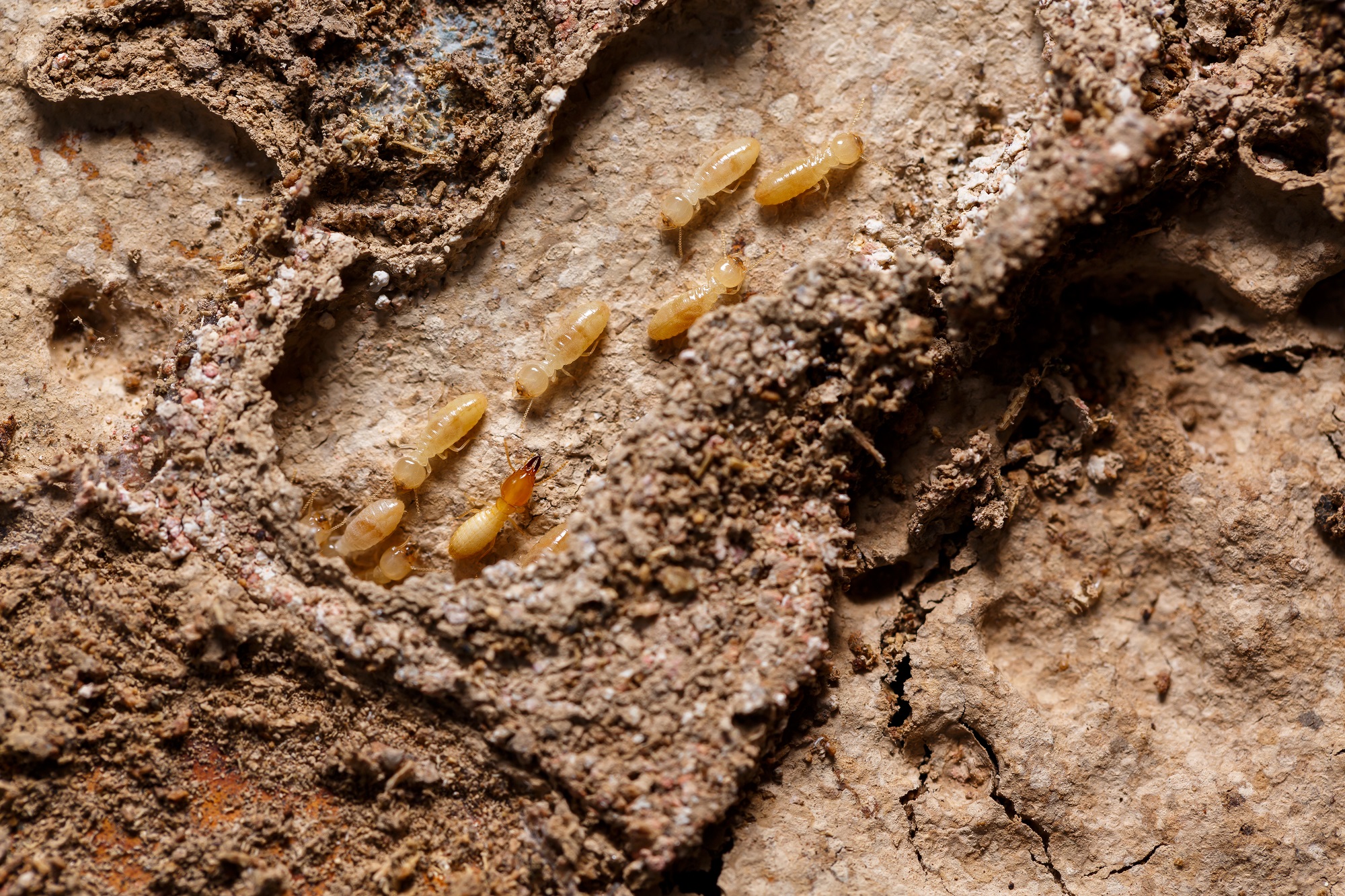
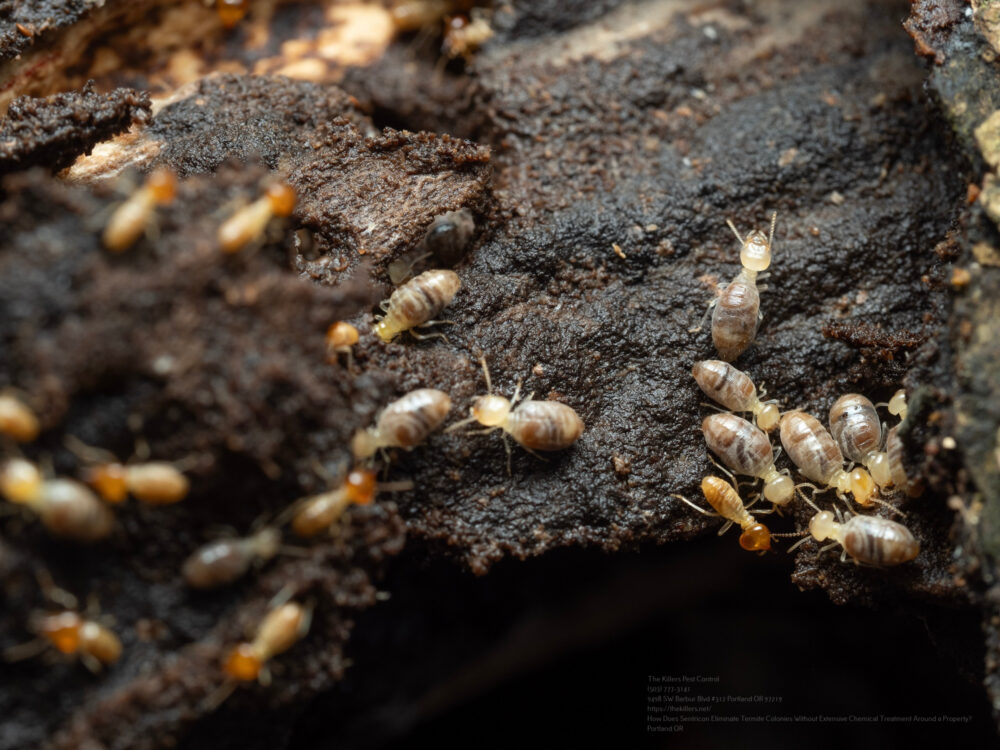
Subterranean termites live in organized colonies, often underground, where workers search for cellulose-based materials such as wood, paper, and other plant-derived substances. These workers gather food and share it with other colony members, including soldiers and reproductives. Because termites are social insects, this food-sharing behavior creates an opportunity to distribute a carefully formulated bait beyond the individual insects that initially encounter it.
Sentricon stations are installed at selected locations around a property where subterranean termite activity is likely to be detected. Depending on the system configuration and treatment stage, stations contain a termite-monitoring material or bait designed to attract foraging termites. Once termites find an active bait station, they feed on the bait and can transfer its contents to other colony members through normal food-sharing interactions.
The bait contains an active ingredient intended to interfere with a critical biological process in termites. Sentricon systems commonly use noviflumuron, an insect growth regulator that disrupts the formation of a termite’s exoskeleton during molting. Termites must successfully molt to develop through their life stages, so interference with this process can eventually cause affected individuals to die. As bait is consumed and distributed within the colony, the treatment can progressively reduce the colony’s population and ultimately eliminate the colony.
This process leverages termite biology rather than relying solely on direct contact between termites and treated soil. However, bait consumption does not guarantee the immediate elimination of the colony. The time required varies with colony activity, bait access, environmental conditions, and other factors, which makes monitoring an important part of the treatment process.
Why Sentricon Requires Less Extensive Chemical Treatment
Traditional liquid termite treatments typically involve applying termiticide to soil around or beneath a structure to create a treated zone. Depending on the building, the product label, and the extent of the infestation, treatment may require work near foundations, concrete slabs, entry points, or other areas where termites could enter. These methods can be effective when appropriately selected and applied, but they may involve drilling, trenching, or localized soil disturbance.
Sentricon takes a different approach by placing bait inside designated stations rather than relying on widespread soil treatment as its primary method of colony elimination. Because the active ingredient is contained within the bait system, the treatment can target foraging termites without requiring a continuous treated-soil barrier. This distinction can be particularly useful for properties with established landscaping, paved outdoor areas, or limited access around portions of the foundation. For a closer look at these differences, read the official guide to termite baiting versus liquid treatments, which explains how the two approaches differ in application and termite control.
The difference does not mean that Sentricon is pesticide-free or that every installation eliminates all other treatment requirements. The bait contains an insecticide, and treatment decisions depend on the property’s conditions and the applicable product label. Some situations may require additional measures, particularly when termite activity is present inside a structure or occurs in locations that in-ground stations cannot adequately reach. The practical advantage lies in using a targeted delivery method to address the colony while limiting the need for extensive chemical applications across the property.
Concerned about termites around your property?
Contact The Killers Pest Control to explore Sentricon termite protection options.
What Makes Sentricon Relevant to Portland Properties?
Portland’s climate and built environment create several considerations for subterranean termite management. The Pacific Northwest experiences seasonal rainfall, and many properties include landscaped foundations, garden beds, wooden fences, decks, and other features that can place cellulose materials near the ground. Moisture does not automatically mean a property has termites, but damp conditions and wood-to-soil contact can create conditions that warrant attention.
In neighborhoods such as Northwest Portland, the Pearl District, and South Waterfront, properties differ in foundation design, landscaping, paved surfaces, and access to exterior soil. A system that relies on strategically positioned stations may offer flexibility where extensive excavation or soil treatment would be disruptive. However, station placement still needs to account for the building’s layout, accessible soil, known termite activity, and the manufacturer’s installation requirements.
Portland’s location near the Willamette and Columbia rivers is part of its broader regional geography. Still, proximity to either river alone does not establish that a property has a termite problem. Similarly, a home near Mount Tabor or farther from the city center should not be considered protected or vulnerable based on location alone. Property-specific conditions, construction details, moisture management, and evidence of termite activity provide more useful information than neighborhood names or broad assumptions about the region.
For property owners comparing Sentricon options in Portland, OR, the key consideration is whether the baiting system suits the type and location of termite activity present. The Killers Pest Control identifies Sentricon installation and termite control among its services, making a property-specific discussion more useful than assuming that one treatment method fits every building.
How Installation, Monitoring, and Colony Elimination Work Together
Sentricon is not simply a product placed in the ground and left without further attention. Its performance depends on a treatment process that allows termites to encounter the bait and gives the pest management professional opportunities to assess activity over time. The exact installation and service schedule depends on the system used, product directions, and the property’s circumstances.
The process generally follows several connected stages:
- Property assessment: A pest management professional examines accessible areas for evidence of termites, potential entry points, conducive conditions, and locations where stations can be installed. Existing activity inside the building may affect the treatment plan.
- Station placement: Bait stations are positioned at appropriate locations around the structure, in accordance with the product’s requirements. Above-ground baiting components may be appropriate in some situations where termites are directly accessible inside or on the structure.
- Termite feeding and bait transfer: Foraging termites discover the bait, consume it, and share it with other colony members. The active ingredient interferes with molting, gradually affecting the colony’s ability to sustain its population.
- Follow-up monitoring: Stations are checked in accordance with the applicable service requirements. Monitoring helps determine whether termites are feeding, whether bait needs attention, and whether further action is warranted.
The stages are connected, but they do not always follow a predictable timetable. Termites might not encounter a particular station immediately, and colony elimination can take weeks or months, depending on conditions. A lack of visible termite activity around a station during a single visit does not necessarily mean that every colony has been eliminated.
What Sentricon Can and Cannot Do
One of the main advantages of baiting is its ability to affect termites beyond those immediately visible near a building. However, it does not repair wood that has already been damaged, reverse structural deterioration, or automatically eliminate moisture conditions that may contribute to future pest problems. If termite activity has affected framing, flooring, or other structural components, the property may need separate repairs after the infestation is controlled.
There are also limits to relying on in-ground stations alone. Termite activity within a wall, an inaccessible structural void, or an area that the installed stations cannot adequately reach may require a different or supplementary approach. Above-ground baiting components may be considered when active termites are accessible in appropriate locations, while other treatment options depend on the findings and product directions. A qualified professional can determine whether the observed activity is consistent with subterranean termites and whether the proposed treatment addresses its location.
Sentricon should also not be described as completely harmless simply because the bait is enclosed in stations. Proper installation, handling, and servicing remain necessary, and the product label governs its permitted use. Property owners should follow professional instructions concerning station access, landscaping work, and any precautions relevant to children, pets, or other occupants.
For Portland property owners, the most useful expectation is that Sentricon offers targeted termite colony control and ongoing monitoring, not an instant solution to every termite-related problem. The treatment’s suitability depends on the infestation, the structure, and the system’s maintainability as intended.
Choosing a Practical Termite Protection Strategy
The decision to use Sentricon should reflect the property’s actual condition rather than a general preference for a single treatment category. A building with accessible soil around its foundation may offer straightforward station placement. In contrast, extensive paving, unusual foundation construction, or active termites in inaccessible areas may affect how the system is installed or whether supplementary measures are appropriate.
The Killers Pest Control provides Sentricon services in the Portland area, and property owners can use its pest control service page to explore available options. A useful consultation should establish whether termite activity is present, explain the proposed treatment approach, and clarify the monitoring required after installation. That information helps property owners compare options based on their property’s needs rather than relying on broad claims about chemical use or elimination speed.
Ultimately, Sentricon in Portland OR reduces the need for extensive liquid soil treatment by delivering bait to foraging termites, which then share it throughout their colony. For suitable properties, this targeted approach offers a way to address subterranean termites while limiting disruption around the building and maintaining a system for detecting future activity.
Concerned about termites around your property?
Contact The Killers Pest Control to explore Sentricon termite protection options.