
Reading the Clues Hidden in Termite Feeding Activity
A termite bait station that is heavily consumed during one inspection and barely touched during the next can reveal more than a simple change in feeding. For property owners researching Sentricon in Newport OR, bait consumption patterns provide clues about where subterranean termites are foraging, how consistently they find food, and whether their activity may be changing over time. These observations are useful, but they need to be interpreted alongside station condition, environmental factors, and other evidence of a termite infestation.
Sentricon monitoring does not provide a direct count of every termite in an underground colony. Instead, it records activity at specific points around a property and helps a termite professional assess changes between inspections. A pattern of increasing consumption, declining feeding, or activity shifting between stations can support a more informed evaluation of colony suppression. However, none of these patterns alone proves that an entire colony has been eliminated.
What Bait Consumption Actually Measures
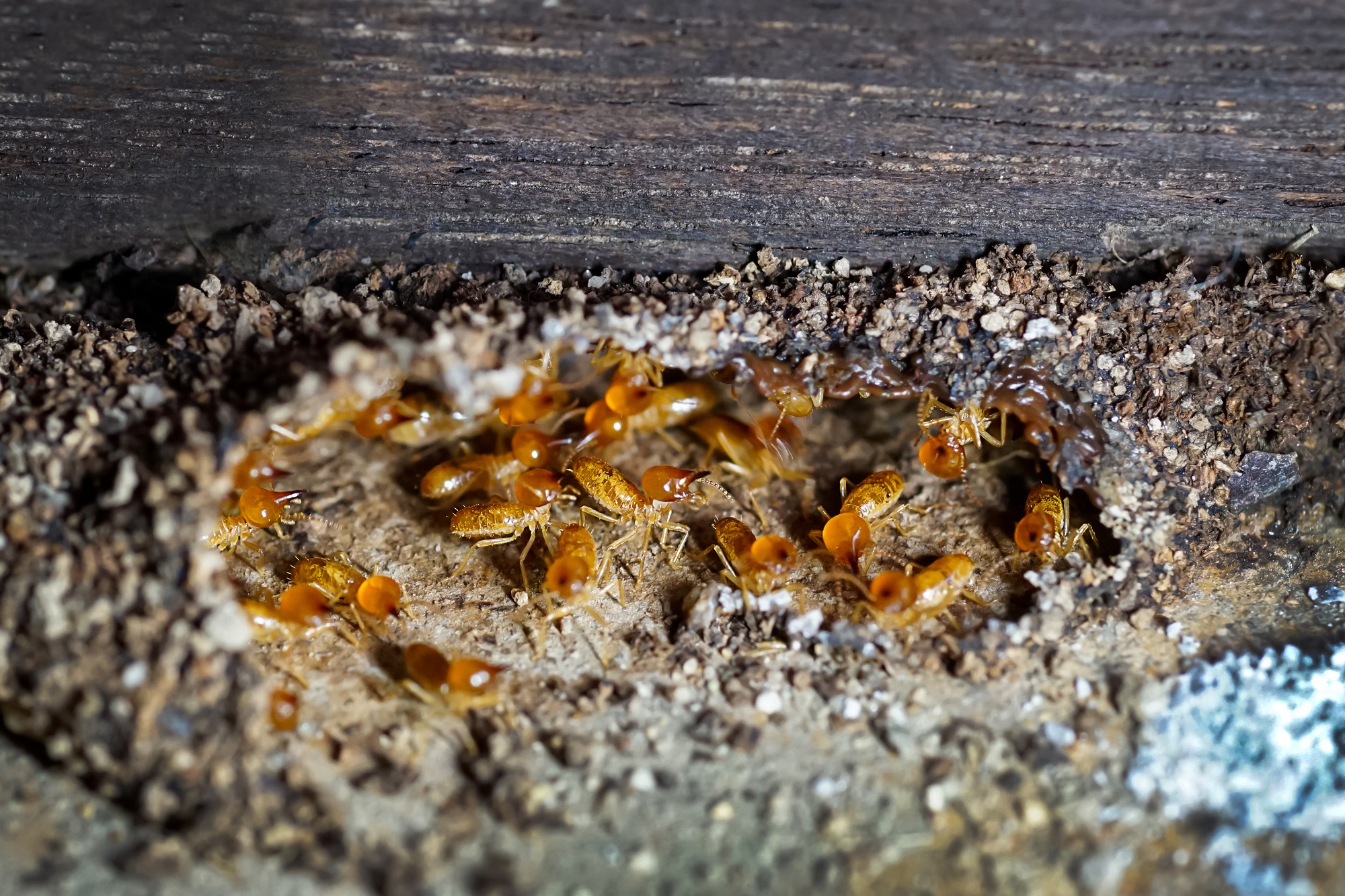
Subterranean termites find bait stations while searching for food through underground tunnels. They do not necessarily move toward a station from a distance because it contains bait. Instead, workers encounter the station during normal foraging, investigate the cellulose material, and may begin feeding if it is suitable. As additional workers follow established routes to the food source, consumption can increase. The timing and extent of that activity depend on local conditions and the termites’ movement through the soil.
The amount of bait consumed is therefore a measure of feeding at a particular station over a particular interval, not a measurement of the entire subterranean termite colony. A heavily consumed bait may show that termites have located and repeatedly used that feeding point. Little or no consumption may mean the station has not been encountered, termites are using another route, or conditions have temporarily reduced activity in that area. The observation is valuable precisely because it provides evidence about termite behavior, but its meaning depends on the wider context.
With Sentricon AlwaysActive, bait is present in the stations from the time of installation, allowing termites to encounter it during their normal foraging. The system uses an active ingredient designed to disrupt termite development, and workers can carry bait back into the colony through their feeding and food-sharing behavior. Because the process is not an instant knockdown, feeding records are best considered part of a longer-term picture rather than a stand-alone verdict on treatment success.
How Monitoring Records Help Assess Colony Suppression
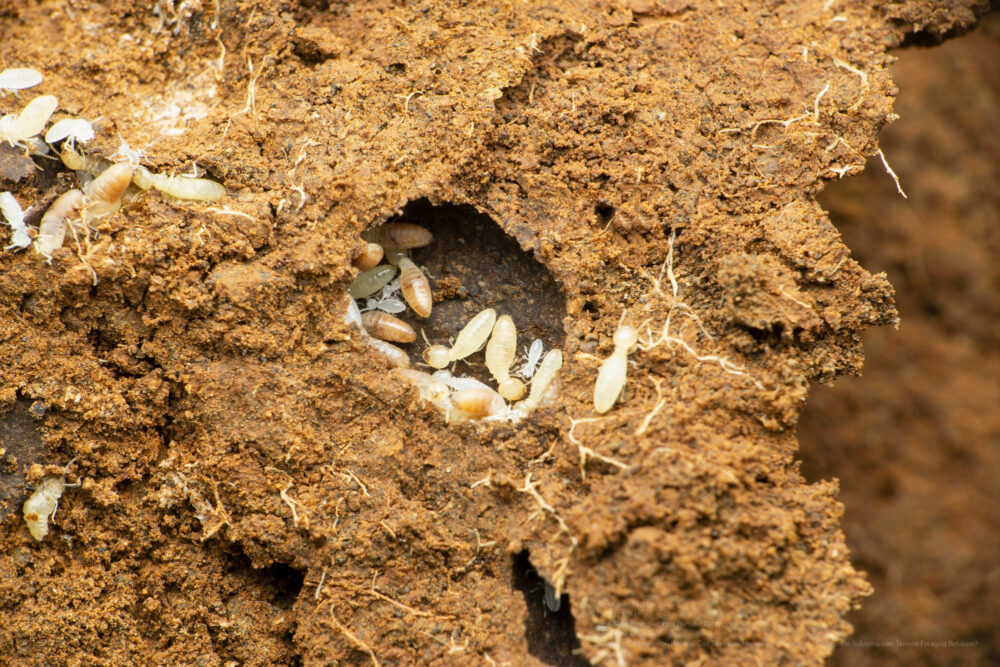
The value of monitoring becomes clearer when each inspection is compared with earlier visits. A useful record distinguishes between bait that has been consumed, bait that remains largely untouched, a station that requires service, and a station whose condition prevents a reliable assessment. These details allow the termite professional to identify trends without treating every low-consumption reading as the same result.
A strong evaluation also compares station activity with other evidence from the property. Fresh mud tubes, damaged wood, discarded wings, or live termites in a building may warrant further investigation even when bait consumption has declined. Conversely, reduced activity across monitored locations over time, with no new signs of termites, may support the conclusion that suppression is progressing. The strength of that conclusion depends on the totality of the evidence and the monitoring history, not on a single favorable reading.
Independent research on termite baiting emphasizes that bait systems rely on worker termites finding and feeding on the bait, while effective monitoring helps establish whether that process is occurring. The U.S. Environmental Protection Agency describes termite baits as systems that use slow-acting insecticides, consistent with the need to assess results over time rather than expecting immediate changes. Sentricon received the Presidential Green Chemistry Challenge Award in 2000 for its targeted approach, but the award does not guarantee a particular outcome at an individual property.
Need help protecting your property from termites?
Contact The Killers Pest Control to discuss Sentricon options for your home or commercial building.
How Different Consumption Patterns Can Be Interpreted
A steady increase in bait consumption may indicate that termites have found a station and that more workers are using the feeding site. It can also reflect changes in how often termites travel along a route or how readily they accept the bait. This is useful evidence of active foraging, but it does not necessarily mean the colony is growing. Consumption reflects feeding behavior at the station, and colony size cannot be reliably inferred from that observation alone.
A decline in consumption calls for a different interpretation. It may be consistent with reduced termite activity following bait exposure, but it can also result from changes in soil moisture, temperature, food availability, or foraging routes. If several stations show lower activity across successive visits, the pattern may be more informative than a drop at a single station, particularly when no fresh signs of termites are found elsewhere. Even then, reduced feeding is evidence to assess, not automatic proof of complete termite colony elimination.
Changes in where feeding occurs can be equally revealing. For example, a station near a shaded, moist section of the property may show increased consumption, while a station in drier soil may become less active. Such a shift may reflect where termites can forage more comfortably, rather than a sudden change in the colony’s location or size. Comparing the pattern across stations helps distinguish a local change in feeding from a broader decline in activity.
Why Weather, Soil, and Nearby Food Sources Matter
Termite foraging is influenced by conditions underground, which can change throughout the year. Very dry soil may encourage subterranean termites to remain in deeper or more moisture-rich areas, while cold conditions can reduce surface activity. Heavy rain and water-saturated soil can also affect movement and access to stations. These effects mean a quiet station during one inspection may tell a different story from the same observation under favorable feeding conditions.
Property features can further shape consumption patterns. Mulch, buried wood, tree stumps, damp timber, and other cellulose sources may compete with bait stations as feeding locations. Leaking plumbing, poor drainage, or persistent moisture near a foundation may create conditions that influence where termites travel. A water hose left leaking near one side of a building, for example, could change local soil moisture and make activity patterns less comparable across the property. Such factors do not prove why feeding has changed, but they provide useful context for interpreting the records.
Research also indicates that the season in which bait stations are installed can affect how quickly termites first encounter them. A study involving bait systems in California homes found differences in interception times depending on the installation season, illustrating why a long interval before the first feeding should not automatically be treated as a failure. The study’s findings apply to the locations and conditions examined, not as a universal timetable for every property in Newport, Oregon.
When a Change in Feeding Deserves Further Investigation
A sudden shift in bait consumption is most useful when it prompts a question that the monitoring record can help answer. If one station stops showing feeding while another begins to show fresh consumption, the change may reflect a different route or a localized shift in foraging. If consumption declines at multiple stations but signs of termites remain inside the structure, the situation requires a closer look rather than assuming the treatment has finished its work.
Station condition matters, too. Bait that has deteriorated, become damaged, or been disturbed may not provide a fair basis for comparing feeding across visits. The station bodies and bait need to remain suitable for the system to function as intended, and any servicing or replacement should follow the product’s instructions. Property owners should avoid opening or altering stations themselves, adding water or other substances, or applying separate pesticides around them without professional guidance, since these actions can interfere with proper monitoring or treatment.
Above-ground non-repellent bait may also be relevant when active termite feeding is found inside a structure, but it is not a substitute for understanding the specific infestation. The appropriate setup depends on the location of termite activity and the product directions. When a monitoring record is unclear, a termite professional can determine whether the pattern is consistent with expected changes, is due to a station issue, or requires reassessing the treatment plan.
Using Sentricon Monitoring to Make Better Long-Term Decisions
Bait consumption patterns are most informative when treated as evidence of behavior rather than as a simple measure of success or failure. Increasing consumption can show that termites have found and accepted a feeding point; decreasing consumption can reflect suppression or a change in conditions; and movement between stations can reveal how foraging activity is distributed across the property. Each pattern becomes more useful when compared with earlier records, environmental conditions, and signs of termites on the building.
For property owners considering Sentricon in Newport OR, The Killers Pest Control can be contacted through its Sentricon-related pest control service page to discuss termite protection options. Questions about how bait consumption is recorded, how inactive stations are interpreted, and what evidence is used to evaluate suppression can help clarify the monitoring process. Long-term protection depends on understanding what the evidence actually shows, including what it cannot confirm from a single visit.
Need help protecting your property from termites?
Contact The Killers Pest Control to discuss Sentricon options for your home or commercial building.