
Colony-Targeting Bait or Treated Soil: Which Approach Fits a Home?
Homeowners researching Sentricon in Portland OR often want to know whether bait stations or liquid termite barriers provide better protection for a home’s foundation. Both approaches are used to manage subterranean termites. Still, they work differently: Sentricon relies on termites finding and consuming bait, while a liquid barrier uses termiticide applied to designated soil areas.
The most suitable option depends on the home’s construction, termite activity, access around the foundation, and the treatment’s maintenance requirements. For homeowners in Portland and surrounding Multnomah County, understanding these differences can make it easier to compare options and ask informed questions before committing to a treatment plan.
The comparison also extends beyond the initial installation. Homeowners need to consider how each treatment handles concealed entry points, what follow-up is required, and how future landscaping or foundation work might affect protection. A baiting system relies on termite activity to deliver the bait through the colony. At the same time, a liquid barrier depends on maintaining an appropriately treated zone around vulnerable parts of the structure.
How Sentricon and Liquid Barriers Control Termites
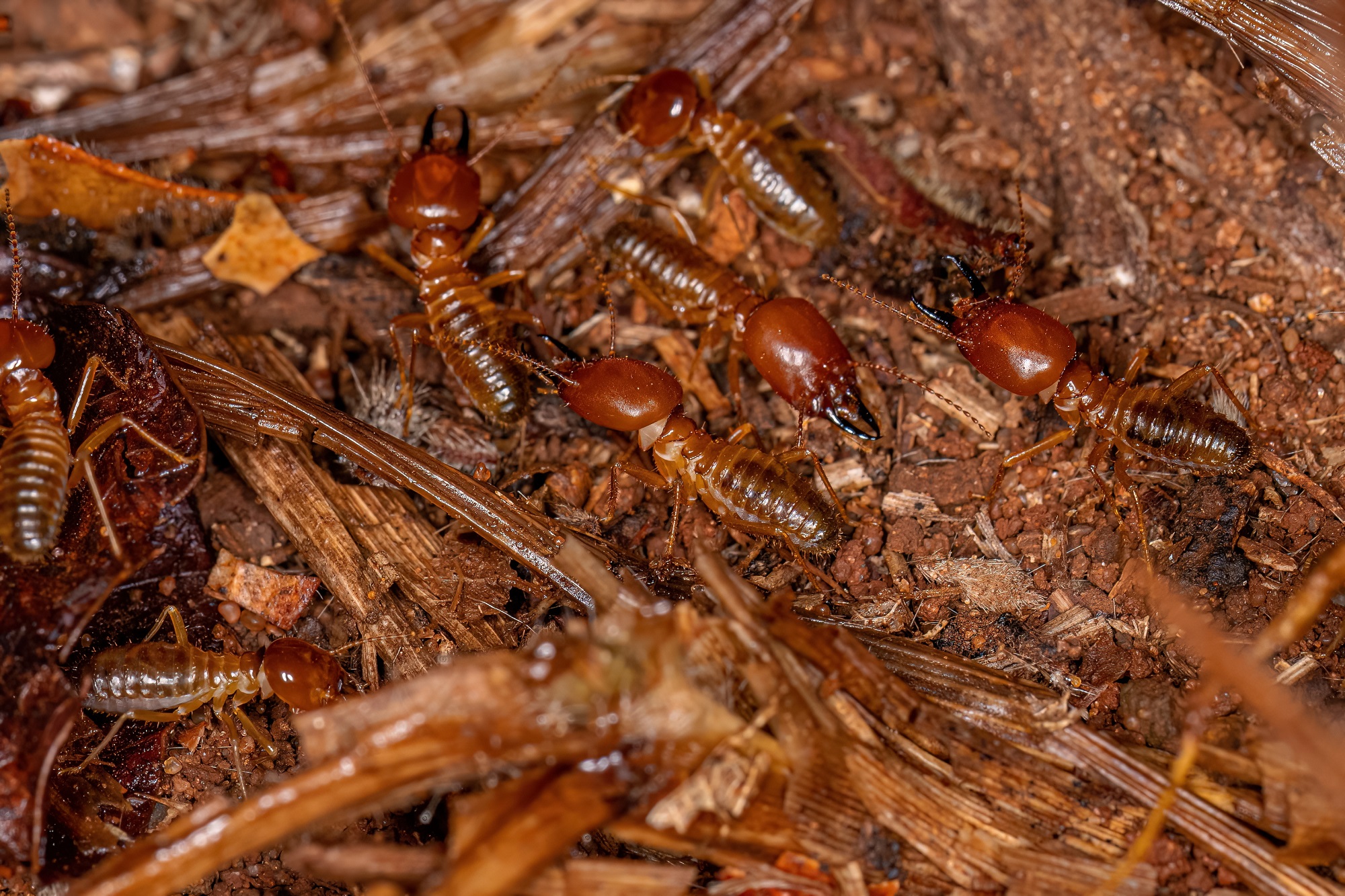
Sentricon is a termite baiting system that uses stations placed at strategic locations around a property. Foraging termites discover the stations, feed on the bait, and can transfer it to other members of their colony. The active ingredient interferes with termite molting, helping eliminate the colony when the bait is consumed and distributed effectively. Because this method depends on termite behavior, station placement and ongoing monitoring are central to its performance.
Liquid termite barriers work through a different process. A termiticide is applied to specified soil areas around a structure, in accordance with the product label and treatment plan. Depending on the active ingredient, termites may be exposed to the treatment when they encounter the treated zone, or the product may have effects that extend beyond direct contact. The purpose is to protect vulnerable routes into the building, but results depend on application quality and whether the required areas are treated properly.
Neither approach makes a foundation completely termite-proof. Subterranean termites can travel through concealed spaces and enter through cracks, joints, gaps around pipes, or other access points. Sentricon targets the colony through bait consumption, while a liquid barrier treats soil along potential entry routes. These are different strategies, so a fair comparison must consider the property’s conditions rather than assuming one method is always more effective.
Chemical Use and Environmental Considerations
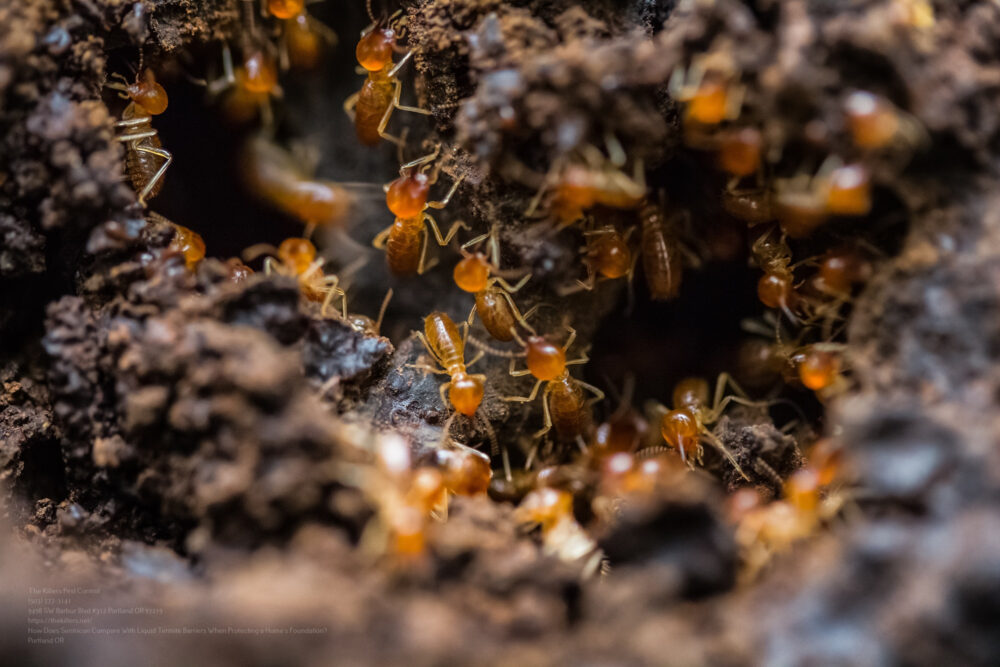
Some homeowners prefer bait stations to avoid applying liquid termiticide to designated soil areas around the home. Sentricon delivers its active ingredient through bait that termites consume, rather than relying on a liquid treatment applied to the soil. However, baiting is not chemical-free, and its safety still depends on correct installation and maintenance. The product’s instructions should be followed, and stations should not be moved or altered without appropriate guidance.
Liquid barriers require careful application because the product is placed in soil around parts of the building. The label specifies where and how the termiticide can be used, including relevant application precautions. Drainage, soil conditions, nearby water sources, and the home’s layout may affect the treatment plan. Improper pesticide use can pose risks to people, pets, and the environment, so products should be applied only for approved purposes and in accordance with their labels. Homeowners can consult the U.S. Environmental Protection Agency‘s pesticide information for general guidance.
Portland’s position in the Pacific Northwest, between the Columbia River and the broader region extending toward the Pacific Ocean, makes moisture management a sensible part of property maintenance. Rainfall patterns and damp conditions can contribute to moisture issues around some buildings, although moisture alone does not prove a termite infestation or determine the appropriate treatment. Repairing leaks, managing drainage, and keeping untreated wood away from direct contact with soil can reduce conditions that attract pests. These measures complement a termite protection plan rather than replacing it.
Concerned about termites around your property?
Contact The Killers Pest Control to explore Sentricon termite protection options.
Foundation Access Can Determine the Practical Choice
Liquid barriers can be useful when the required soil areas around a foundation are accessible for treatment. However, continuous access is not always straightforward. Concrete patios, driveways, porches, attached garages, utility lines, and later additions can complicate application. Depending on the product label and construction, treatment may require trenching, drilling through concrete, or injecting termiticide beneath a slab. Those steps are not necessary at every home, but access restrictions can affect the scope of work.
Sentricon stations can offer a different installation approach because the system relies on strategically positioned bait stations rather than a continuous treated-soil zone. Hardscaping and other obstructions can still limit suitable placement, and stations must be located to serve their intended purpose. The National Oceanic and Atmospheric Administration provides weather and climate information, which may be useful for understanding general environmental conditions.
These factors can matter in varied Portland neighborhoods, including Northwest Portland, the Pearl District, and South Waterfront, where property layouts and surrounding hard surfaces differ. The same principle applies to South Portland and other nearby areas: neighborhood names alone do not determine the best treatment. A home’s actual construction, landscaping, and evidence of termites provide more useful information than its location within the city.
Monitoring, Maintenance, and Long-Term Protection
One of the clearest differences between the methods is how protection is checked after installation. Sentricon requires ongoing station monitoring because the presence of an installed station does not automatically mean termites have found the bait or that a colony has been eliminated. A station may show no activity during one visit because termites are foraging elsewhere or have not yet discovered it. Monitoring allows the treatment provider to check station conditions, detect feeding activity, and address maintenance needs per the system’s instructions.
Liquid barriers have different follow-up considerations. Their effectiveness depends on the product, the original application, and whether the treated soil remains undisturbed. Excavation, landscaping, utility work, construction, or other changes around the foundation can affect previously treated areas. Homeowners should retain treatment records and ask which product was used, where it was applied, and whether any future work could require reassessment.
Neither system should be viewed as a permanent solution that never needs attention. New mud tubes, damaged wood, discarded wings, or live termites after treatment deserve further investigation. Those signs do not automatically prove that the original treatment failed, since termite activity may occur in a different area or involve a route that was not previously identified. The appropriate response is to report the evidence and have the situation assessed, rather than adding pesticides or modifying stations without guidance.
Choosing the Right Approach for a Specific Property
A useful comparison starts with four questions: how the treatment reaches termites, how installation affects the foundation and surrounding areas, what follow-up is required, and how the system responds to the property’s specific risks. Sentricon is designed to affect colonies through bait consumption and ongoing monitoring. A liquid barrier is designed to treat soil along vulnerable routes into a structure. The most practical choice depends on access, termite activity, previous treatments, and the building’s condition.
Homeowners should ask what the proposed treatment is intended to accomplish, which areas will be covered, how its performance will be checked, and what limitations remain after installation. They should also ask how construction, landscaping, or future excavation could affect protection. For example, a home with extensive concrete around the foundation may present different installation challenges from one with accessible soil along most of its perimeter. A history of termite treatment may also affect the plan, particularly if records are unavailable or there is evidence of continuing activity.
For homeowners considering Sentricon in Portland OR, and Multnomah County, The Killers Pest Control provides a starting point for discussing the company’s relevant services on its website. A sound decision weighs how each system works, the practical conditions at the foundation, and the maintenance required to sustain protection, rather than relying on a blanket claim that one treatment is best for every house.
Concerned about termites around your property?
Contact The Killers Pest Control to explore Sentricon termite protection options.