
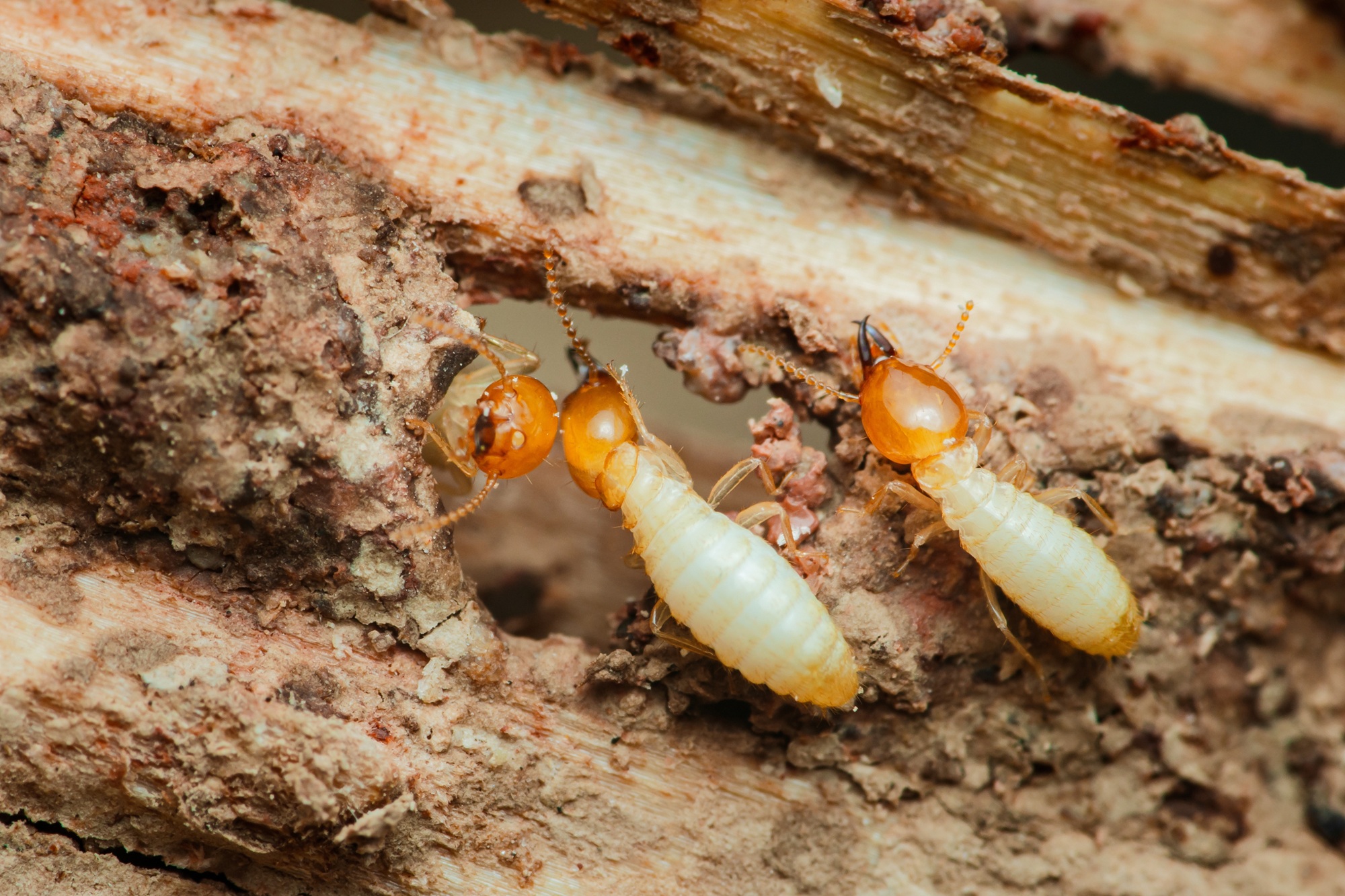
Why One Quiet Station Doesn’t Always Mean the Termite Problem is Gone
A termite colony can disappear from one bait station and remain active elsewhere. That’s why termite baiting in Salem OR requires more than placing stations in the ground and waiting for termites to find them. A successful long-term strategy considers how subterranean termites forage, whether activity is connected to one colony or several, and whether surviving groups could continue feeding near a structure.
Termite baiting addresses colony fragmentation risks by combining careful inspection, strategically placed monitoring stations, continued bait availability, and long-term follow-up. Because subterranean termites may forage across multiple areas or leave some activity undetected, professionals monitor changing patterns rather than assuming one inactive station means complete colony elimination.
The challenge is a little like tracing underground roads without seeing them. Worker termites move through hidden soil and mud tunnels, searching for cellulose materials and returning food to the termite colony. When conditions change, their internal structure and feeding routes can change too.
The Hidden Colony Network Beneath Salem Homes
Subterranean termites are social insects that live and forage out of sight, which makes a termite problem difficult to judge by surface clues alone. Mud tubes, discarded wings, reproductive swarmers, hollow-sounding wood, and sometimes flying termites can signal activity. Still, none of these signs automatically reveals the full size or boundaries of a subterranean termite colony. The worker caste handles much of the feeding, while the reproductive and defensive castes support the colony’s survival and expansion.
People often ask, “Can one termite colony split into separate colonies after treatment?” The answer depends on the species, colony biology, environmental conditions, and what actually happened during treatment. More importantly, separate groups may already be present within the same property area, or neighboring colonies may move through different parts of the soil. That’s why a quiet bait station shouldn’t automatically be treated as proof that every wood-eating insect nearby is gone.
Salem homes sit within the Willamette Valley, where seasonal moisture, soil conditions, landscaping, wood-to-soil contact, and structural openings can all influence termite activity. Cracks in concrete and other hidden access areas can create routes that complicate an inspection process. A property inspection should therefore look beyond obvious structural damage and consider the broader conditions that support termite activity around the building.
Why Termite Baiting Needs a Long-Term View
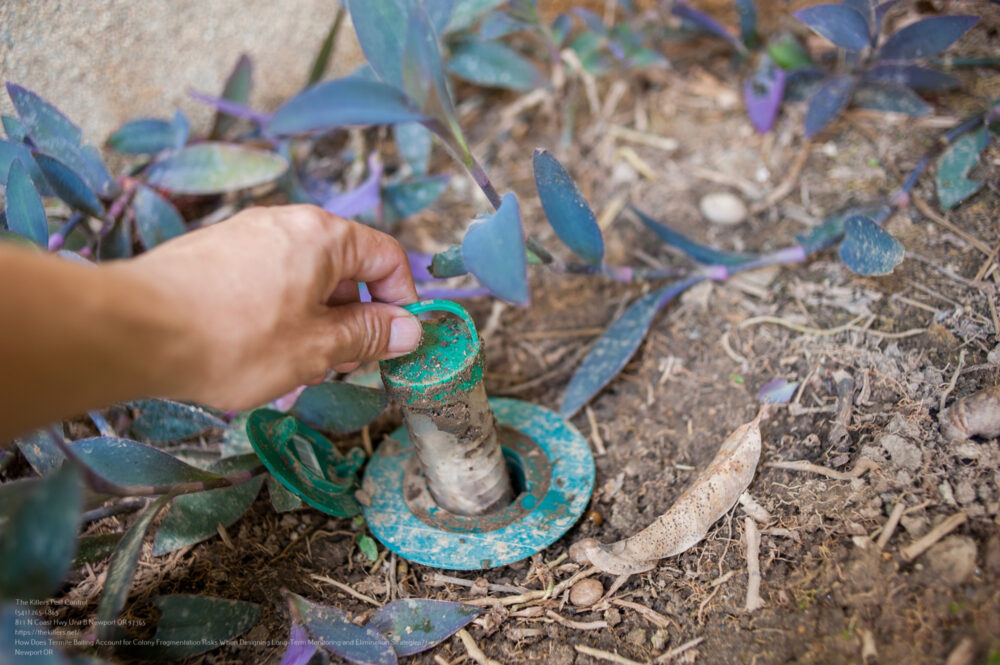
The biggest advantage of a carefully managed baiting program is that it works with termite feeding behavior rather than relying only on a visible treatment boundary. When worker termites feed on a bait matrix, slow-acting ingredients can affect the colony through normal food sharing and population processes. The Environmental Protection Agency notes that termite baits commonly use cellulose baits with slow-acting active ingredients, including compounds that disrupt insect development or growth.
Research involving 122 subterranean termite colonies found that all monitored colonies were eliminated within 1 year of bait initiation, with 63% eliminated during the first quarter. The study also found that colonies foraging into multiple stations could maintain feeding as bait was replenished, showing why station activity across a property can provide useful information about the larger network.
That doesn’t mean every termite treatment follows the same timeline. Colony size, species, feeding patterns, weather, bait acceptance, and the property’s conditions can all affect progress. Still, the principle is important: long-term termite protection depends on tracking what termites are actually doing, not simply reacting to the first mud tube that appears.
Want Expert Termite Baiting for Your Property?
Contact The Killers Pest Control today for friendly, professional help with your termite concerns.
What Professionals Watch for After the First Signs Fade
The most useful expert insight is simple: silence isn’t always certainty. If a station becomes inactive, pest control professionals consider whether feeding has truly ended, whether termites have changed routes, whether another colony was not connected to the bait, or whether seasonal conditions have temporarily reduced visible activity.
That’s particularly important when colony fragmentation or multiple colony territories are possible. Research has shown that bait station methods can be used to study termite foraging territories and distinguish colony interactions. At the same time, EPA guidance recognizes the importance of establishing foraging areas before evaluating bait performance.
For a Salem homeowner, the practical takeaway is to keep records. Note the date of termite activity, locations of mud tunnels, areas of structural damage, and any changes found during home inspections. Don’t disturb suspicious activity before a professional can evaluate it unless immediate safety requires action. A disturbed feeding route can make an already hidden problem even harder to interpret.
The Killers Pest Control brings this same patient approach to termite control: inspect first, monitor patterns, adjust the strategy when evidence changes, and avoid declaring victory too early. That can be more valuable than rushing toward chemical barriers or structural drilling when the property’s actual conditions call for a different solution.
The Key Lessons that Make Long-Term Monitoring Stronger
The main lesson is that colony elimination and long-term protection are related but not identical goals. A successful baiting system may eliminate an active termite colony, while continued monitoring helps detect surviving activity, previously undetected colonies, or new foraging pressure near the structure. EPA product guidance similarly notes that if pre-baiting and baiting are discontinued, surviving or newly arriving colonies may later forage at possible entry points.
Homeowners should also remember that not every wood-damaging pest is a termite. Carpenter ants and wood-boring beetles can create different signs, while drywood termites differ from subterranean termites in their biology and nesting behavior. Even terms such as white ants, warrior caste, or sawdust-like termite droppings can create confusion when used loosely. Accurate identification should come before choosing a treatment.
The strongest strategy combines inspection, professional baiting systems, regular monitoring, integrated pest management, and sensible termite prevention. For Salem homes in the Willamette Valley and wider Pacific Northwest, that means paying attention to the whole property rather than focusing only on the first visible sign. Long-term monitoring is what helps turn termite control from a one-time reaction into a more durable defense against hidden activity.
Why Choosing The Killers Pest Control is the Smart Move for Long-Term Termite Protection
We at The Killers Pest Control provide the best solutions to our customers by looking beyond the obvious signs of a termite problem. We understand that subterranean termites can move through hidden soil pathways, shift feeding patterns, and create uncertainty when activity disappears at one location but persists elsewhere.
We take a careful approach to termite control, using inspection, monitoring, and professional treatment planning to help customers make informed decisions about their pest control needs. Our goal is to address active termite activity while keeping long-term termite prevention and continued observation in focus.
We showcase our excellent termite control services through thorough evaluations, reliable monitoring, and strategies tailored to each property’s conditions. We also provide attentive pest control support that helps customers understand what professionals find and why ongoing monitoring may matter.
Don’t wait until hidden feeding causes more structural damage. Contact The Killers Pest Control for expert termite control and monitoring tailored to your property. For a smarter long-term approach to colony activity, prevention, and elimination, choose termite baiting in Salem OR.
Want Expert Termite Baiting for Your Property?
Contact The Killers Pest Control today for friendly, professional help with your termite concerns.